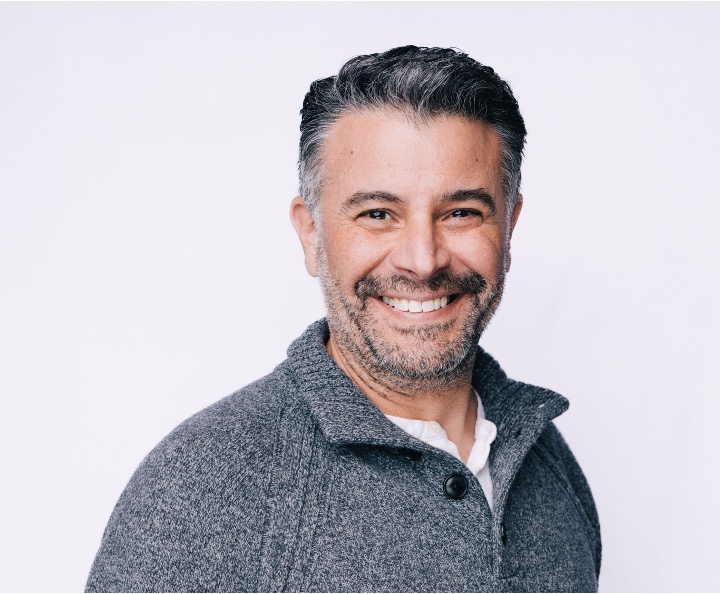
Mandy Hornaday: Hey everyone, welcome to Growth Activated. I'm your host, Mandy Hornaday, and I'm so thrilled to have you join me for this very special first guest episode. Today I'm honored to welcome Scott Todaro, an executive, entrepreneur, author, and mentor to so many in the marketing community, including myself. A couple of years ago, when I was transitioning into an executive marketing role, I discovered Scott's book, The Next CMO: A Guide to Operational Marketing Excellence, and honestly, it was truly a game changer for me. I applied the principles in his book, combined them with my own experiences, and eventually earned a seat at the executive table. Having Scott here as our very first guest feels like a full circle moment for me. Scott has over 30 years of experience as a marketing leader driving growth for both B2B and B2C companies and has achieved five successful exits, four acquisitions and one IPO. Today we're diving into the strategies, principles, and mindset that have fueled his incredible career. Hey Scott, it's so great to have you on Growth Activated.
Scott Todaro: It's great to be here, Mandy. Thanks for reaching out.
Mandy Hornaday: I've shared this with you before, but for all of our listeners, you have been like the CMO mentor I never had. A couple of years ago, when I discovered The Next CMO, I was an executive director at a really large company and I hadn't had a VP of Marketing reporting into for years. Your book really changed my career. I've probably read it three or four times. It feels very surreal and full circle to have you as the first guest on Growth Activated.
Scott Todaro: I'm happy to be here and those are kind words. I appreciate it. I'm not sure I've read the book three times myself.
Mandy Hornaday: That's okay, I did the work for both of us and I'm going to grill you on the questions today.
Scott Todaro: Very good. Hopefully I still have the answers.
Mandy Hornaday: Scott, you've had five successful exits over the duration of your career. What is your secret sauce? How are you choosing these companies before you take on a role with them?
Scott Todaro: Voodoo. I have a lot of horseshoes around my house and shamrocks and all kinds of other wonderful things. But seriously, the way I always look at selecting a company, the first thing I look at is the product. Does it have a strong value proposition that I can believe in? And what is their position in the market? I won't take a job unless I've done a lot of market analysis. Sadly, I coach a lot of CMOs who take jobs just because they want to become a CMO. They want the title and they're willing to take a job that probably isn't going to pan out, they probably know that up front, but they're so focused on becoming a CMO because it's a life goal and they know it's so hard to get the opportunity when you haven't done it before. So they take it without asking the tough questions. You have to grill the executive team.
Scott Todaro: After I look at the product and the market fit, the second thing is: is the executive team on board with marketing? If I hear in an interview, 'we just need leads,' I'm out. I literally walked out of an interview once, they were listing all these things that wouldn't report to me and at the end of it they said, 'look, I just need you to create leads.' Right now, there are too many CMOs out there doing only lead generation. If that's what you're focused on, I can guarantee you're going to fail. You have to have an executive team that believes in marketing and will give you the power and the time to actually execute it properly.
Scott Todaro: The third thing is the role itself. Too many CMOs only have lead generation, PR, and branding. That's not a full marketing job. If you don't own pricing and packaging, the way you price something affects how you message, if you don't own messaging because it's sitting under a product team somewhere else, if you can't get involved in distribution channels, you're not really a full CMO. You're a VP of demand gen or a VP of brand. You have to control those elements, they all work in tandem. A lot of marketers say, 'I haven't done all those things. How do I fight for something I haven't done before?' A lot of it is intuitive. You put your time and energy into learning it and hire people who can help you. You have to be comfortable becoming a manager and not needing to know everything.
Mandy Hornaday: One of the things I've noticed when interviewing is a lack of executive alignment on primary goals, the CEO, CFO, and COO don't seem to share a clear vision. Do you work that into how you're vetting companies?
Scott Todaro: Absolutely. The question I always ask is: what are the goals for this year? And I ask each executive separately. If they're all aligned on what the company goals are, not marketing goals, company goals, then I feel comfortable. I went to a company once where literally none of the executives were on the same page. In my first week, I ran a positioning exercise. I brought all the executives together for two full days and we came up with two sentences: who our target audience was, what benefit we were offering and what pain we were solving, what the product was and how we were defining it, and how we were different from the competition. It took two full days. But once we got that nailed down, it was so much easier to build a plan off of those goals. Four and a half years later, they had an amazing IPO.
Mandy Hornaday: Once you've decided a company has promise and you want to join, what's your playbook for the first 90 days and first six months?
Scott Todaro: This is going to be wildly unpopular, but it's the truth. And the only reason it's the truth is because I spent about 25 years making mistakes before I got to the right mix. You need to have the intestinal fortitude to say to the CEO and the CFO: I will accomplish nothing in the next two months. What I'm going to do for two months is conduct a business audit. I'm going to analyze the market, look at our data, talk to all the executives, talk to customers and prospects, do a win-loss analysis, talk to any industry analysts or press covering the space, and then at the end of two months, I will present everything I've learned to the executive team.
Scott Todaro: This does two things. First, it shows the executive team that you've done serious work, you're creating truth for them. Second, executives who've been at a company a long time get siloed. When they see all that information brought together in aggregate, it's very hard for them to push back. And if they do, you can point to the other executive who gave you that piece of information and let them hash it out.
Scott Todaro: After the audit, you have 30 days to put together a plan. Pull your most competent people together, build the marketing plan, and workshop it for about 30 days to get it approved. Then you start executing. If you do the math, you're now four months in and you've accomplished nothing other than creating a plan and identifying where the market is. Marketing is the long game. At six months, you should start to see some progress, not a lot, a little. At nine months, the engine should be clicking, people start getting into rhythm, understanding the processes. Between 12 and 15 months, you'll start getting real results. That's the timeline.
Scott Todaro: If the CEO isn't looking at long-term success, they're hoping you can pull a miracle out of your pocket. That's not a reality. If they're strategic enough, they'll recognize you're doing the right things for the business long-term.
Mandy Hornaday: Are there non-negotiable go-to-market artifacts, ICP, personas, the things executives sometimes push back on, that have to be in place before you can start building a demand engine?
Scott Todaro: Those should all come out as part of the business audit. Your planning should include your findings on target audience and personas, and you hash those out with the executive team because they've been there a while and their input matters. Once you start executing, you need the right people in place. If you have a team of ten or more, you likely have gaps. No marketing ops person means you can't calculate ROI or figure out what's working. No product marketing person means your messaging won't be right. And marketing is really this simple: it works when you say the right thing to the right people. When you say the wrong thing or say it to the wrong people, it never works.
Scott Todaro: The three hires I consider non-negotiable if they're not already there: demand gen, product marketing, and marketing ops. Even if there isn't a full ops workload immediately, having someone managing data, analyzing performance, and tracking the budget while the role grows is critical. That's my triumvirate.
Mandy Hornaday: I want to transition to goals-based marketing. It's easy to say our marketing goals should roll up to business goals, it's much harder to do in practice. I was just talking to a CMO whose company goal was growing revenue by a specific amount, and her marketing goals were email send volume and social media follower counts. Walk us through how you actually take a business goal and build the right marketing goals from it.
Scott Todaro: It's really this simple. You are an executive and you should be sitting on the executive team as they craft company goals. If you look at those company goals, I can guarantee that between 60 and 100% of them, marketing either owns fully or has some responsibility for helping achieve. Here's a little secret I wrote about in the book: there are only three marketing goals. You're either creating awareness because no one knows who you are, shaping perception so people have a positive opinion of you, or driving sales. That's it. There are tons of sub-goals within each, but start with those three. When you go into the executive team meeting, understand what the company is trying to accomplish and build your goals off that.
Scott Todaro: We surveyed over 2,000 CMOs through the Operational Marketing Index at Plana. The most staggering finding: only 39.5% of CMOs build their marketing goals off company goals. That blew me away. What are the rest building their goals from? Take the company goals and build your plan around achieving them. Everything you do that funnels up to those company goals, even if you can't track ROI on every line item, shows progress. Stop reporting on how many trade shows you attended. Report on your progress against company goals. You'll be in a much better place in executive team meetings and board meetings.
Mandy Hornaday: Should we always be working on all three of those top-line objectives in parallel, or are there times to focus on just one?
Scott Todaro: It depends on your stage. If you're Microsoft selling Office Suite, people already know who you are, they have a perception, and your primary goal is probably sales. If you're a startup nobody has heard of, you're going to put a lot of money into building brand awareness and perception. You've got to create the right mix based on where you are in your company lifecycle. And this is where strategies come in. A strategy is simply a way to accomplish a goal, and there are literally hundreds of them. You could drive sales through acquisition, upselling existing customers, new distribution channels, e-commerce, or partnerships. CMOs need to be thinking holistically about which strategies will work, not just defaulting to what they're most comfortable with.
Mandy Hornaday: How do you balance long-term vision with short-term goals? I was just talking to a COO who said they want to be known as the best service provider in their industry, which feels like a multi-year goal, alongside a revenue target for this year.
Scott Todaro: You can absolutely run long-term campaigns. Companies have been doing it since the beginning of time, Nike's Just Do It campaign started in 1988 and it's still running. But what does 'the best' actually mean? Is the best the most revenue? The most customers? The highest customer satisfaction ratings? The best star rating on reviews? Gartner or Forrester saying you're the best? Define it, then you can get quick wins. Get customer testimonials. Then work toward best star rating on reviews. Then catch the attention of analyst firms. Each one of those can be a discrete campaign building toward the primary goal.
Mandy Hornaday: You have strong feelings about how we misuse the word 'campaign.' Walk us through what a campaign actually means and how we've gotten it wrong.
Scott Todaro: We're misusing it because of the technology providers. I have ultimate credibility in saying this because Peter and I were founders of Plana, a MarTech product, so I'm going to throw a little shade at the tech industry. When HubSpot and Marketo were built, they were built by engineers who didn't spend a lot of time talking to marketers. When they looked at sending an email, they thought 'email' sounded too small, so they called it a campaign. But a campaign is something specific. A campaign is designed to achieve a goal. It needs a goal, a strategy, a target audience, a set of messages, and then you select the channels through which to send those messages. Then you measure results. That's what a campaign is.
Scott Todaro: You own the campaign. You don't own Facebook. You don't own that trade show. Those are channels, the people you want to reach are on the other side. If you build your plan from the channel up, you'll never know what's actually working. But if you build the campaign around the message and the target audience, and deploy it across multiple channels, you can see two things: did the message resonate with that audience, and which channel was most effective? I've seen people kill LinkedIn advertising because 15 out of 20 ads didn't work. But five of them did. You should be reworking the 15 that aren't working, not killing the channel. Channels are dumb pipes. You make them effective with your language. If it's not working, you didn't say the right thing to the right people.
Mandy Hornaday: Where do programs fit? I think of programs as ongoing investments, like SEO or an events program.
Scott Todaro: Technology has created silos inside marketing organizations, people aligned to channels rather than to campaigns. When you run marketing by silos, people check out the moment a topic isn't their area. But if you group people into pods around a campaign and a goal, you get engagement, shared ideas, and visible progress. To your question: a program is something ongoing and typically more reactive, like a PR program where you're responding to news as it happens. A project is a one-time thing with a start and end date, like a website build. A website isn't a campaign or a program, it's a channel and a project. And it's table stakes.
Scott Todaro: This is where marketers get into trouble with budgets. Table stakes items, a website, a brand, a CRM, a marketing automation platform, a database, you don't run ROI on those. They're like accounting software for the finance team. Every dollar above that is discretionary, and you should track ROI on discretionary spend. Technology is designed for efficiency, but ask yourself whether a 1% efficiency gain is actually worth the money.
Mandy Hornaday: What advice would you have for marketing leaders who don't have a strong relationship with their CFO or whoever's approving their budget?
Scott Todaro: Then you've made a mistake. A lot of CMOs try to avoid their CFO because CFOs are prickly, it's their job to say no. But you need to partner with them. Here's the magic I learned midway through my career: sit down with the CFO as you're building your plan and say, 'I'm going to spend money to achieve these company goals, and here's how I'm going to track the ROI.' Even if you don't have the tracking systems in place yet, tell them you're going to work toward it in a specific timeframe. Then ask them something like their margin rate. Watch them fall off their chair. Nobody has ever asked them that, because what they hear is: you want to understand the business.
Scott Todaro: I had the chance to sit down with 12 CFOs in a roundtable. I asked them: if marketing could show you 3X positive ROI on their spend, every dollar returns three dollars of profit, what would their budget be? They said in theory their budget would be unlimited. That's the partnership you're looking to build. It only comes through communication. Don't avoid the CFO. Go make a friend.
Mandy Hornaday: There's a feeling in the CMO community that marketing is leaving creativity behind and becoming overly focused on proving ROI. What's your take?
Scott Todaro: It's not either/or. When I hear someone frame it that way, that tells me they're an either/or person. You can be super creative and still hire people on your team to handle measurement. If you do things that are creative, more than likely they'll create results, but you can't bury your head and refuse to measure. Marketing is unique among business disciplines. I need visionaries, strategists, tacticians, analysts, creative writers, designers, great communicators, all in one team. No other department requires that range. So if something is outside your comfort zone, hire the person who knows how to do it. You are an executive first and a marketing person second. You are a manager first and a marketer second. If you're mired down in the functional work you grew up doing, you're going to miss the big picture, push back on the executive team, and find yourself in trouble. Be as creative as you want, just measure the results.
Mandy Hornaday: That's awesome, Scott. What's next for you? Where can people find you?
Scott Todaro: I'm winding down and giving back. I'm teaching now at Babson College and the University of Massachusetts, it's great to interact with graduate and undergraduate students and be around young people. I'm doing CMO coaching, some consulting, and running the Next CMO community, the Next CMO podcast, and free Next CMO workshops online. After being a marketing leader seven times, that was enough, but I wish everyone well.
Mandy Hornaday: You're awesome. I'd highly encourage anyone who's interested to join your workshops, the Next CMO community, or check out the podcast. Thanks so much for your time today, Scott.
Scott Todaro: Thanks, Mandy. It's always great to talk to you.
Mandy Hornaday: All right, friends, I hope you enjoyed today's conversation with Scott. I personally had a lot of great takeaways and things I'll be implementing with my clients, and I hope you did too. If you enjoyed today's conversation, please subscribe, leave a review, and share this episode with your network. In the meantime, keep activating growth for yourself and your business.