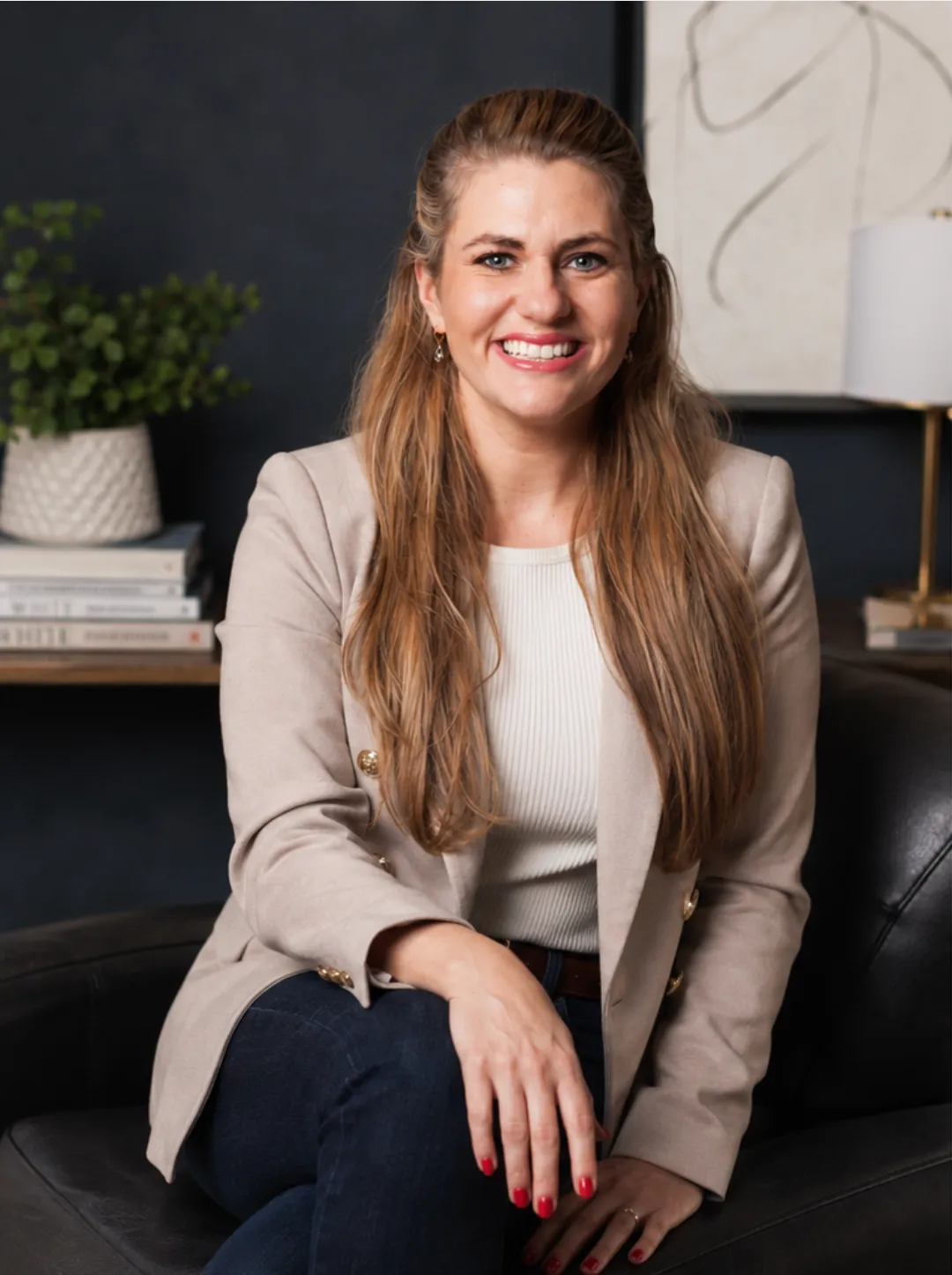
Mandy: Welcome to Growth Activated. I'm Mandy Hornaday, your host, with 15 years of experience leading marketing teams from small startups to large service organizations. I've built high-performing teams of all sizes and seen firsthand how fast the landscape is evolving, which makes marketing leadership more complex than ever. Today I help marketing leaders elevate their strategies, lead with confidence, and build careers they love. If you're ready to drive impact and unlock growth for yourself and your company, you're in the right place. Let's get started.
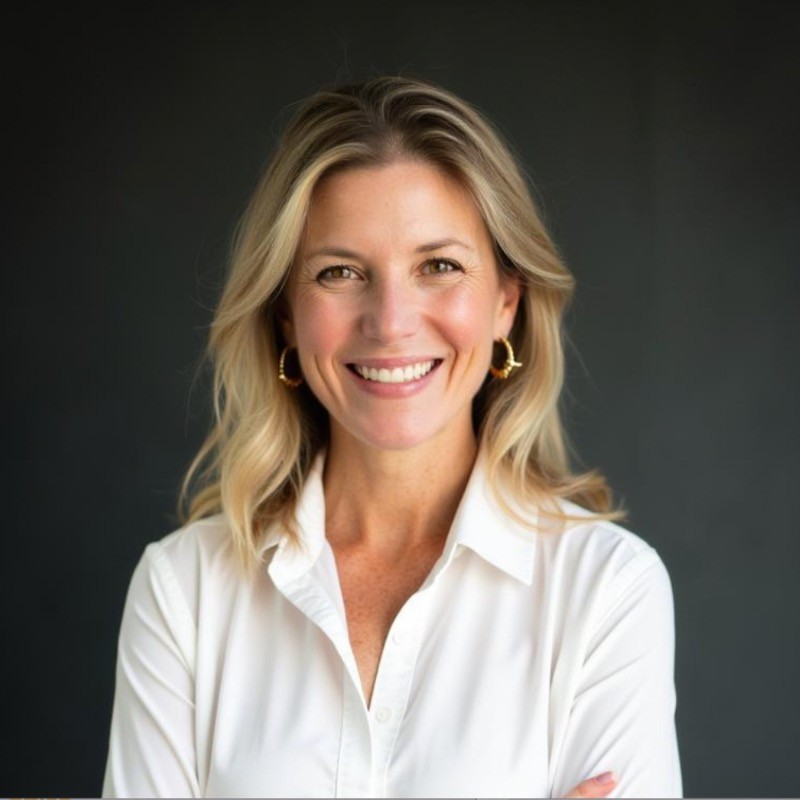
Mandy: AI was supposed to hand us all our time back. So why are so many of us more exhausted than ever? That tension is exactly where this conversation lives. I sat down with Heidi Darling, someone I had the privilege of working alongside in our fractional days. Heidi spent her whole career in marketing, and she has done it across the map, from luxury hospitality to founding and funding her own startup to scaling tech companies across B2B and consumer, including one that went public on the NASDAQ. She is also one of the most AI-forward operators I know, the type who is in a new tool the day it goes live. She recently went all in on Savo, a platform built on the idea that human intelligence should sit above AI, not underneath it. This episode is less playbook and more two CMOs thinking out loud about what leadership actually looks like right now. We get into why work is not finite in the AI era, the sameness problem that is flattening B2B strategy, and what it takes to stay valuable when the bar keeps rising. Let's dive in.
Mandy: Hey, Heidi. Welcome to Growth Activated. I'm so excited to have you here today.
Heidi: Hey, Mandy. It's great to be here. Thanks for having me.
Mandy: Why don't you give us the 60-second snapshot of your background and what you're doing now? I'm so excited to talk to you because we were both fractional CMOs and worked alongside each other, and I just appreciated our partnership.
Heidi: Thank you, and likewise. I always appreciated your strategic approach and your customer obsession, which I share. A little bit about me: I've been in marketing my whole career. I started in my twenties in luxury hospitality, which was amazingly fun to do in your twenties because you got to travel and do all these cool things. After kids, I was home and got bored, so I started a startup. I was in an incubator and then I was funded. It was a radical crash course MBA in startups, and I made all the classic first-founder mistakes. It was a vitamin, not a painkiller, a cool idea but not an easy thing to monetize. So after about a year and a half I pivoted. I spoke with the founder of Pandora and he said, good luck monetizing that, we still haven't figured it out. My takeaway was that I love startups. So I went to work for a robotic exoskeleton company, another classic startup wild ride, and in two years we uplisted to the NASDAQ. That began my love affair with startups. I've done mostly enterprise, the classic B2B and consumer plays, a lot of marketplace and platform plays, all tech. I'm in the Bay Area, so the shoe fits. About three years ago my dad was sick and I was taking care of him. I needed to pause, but I didn't want to be completely out, because AI was just hitting and I wanted to stay relevant. Fractional work was a really good way to stay in the game, have impact, and mentor, while taking some time for my personal life.
Mandy: I love that. What a great reason to go fractional. One of the reasons I love being fractional is the freedom, I get to travel the world, which has been a dream. Now I know you recently went back in house and took a job at a startup. Tell us about that. What caused you to make the leap? Was it about AI, or were there other reasons?
Heidi: The best way to describe it is that it felt like a calling. I'll go back to whether you're cut out to be fractional as a human. It's a set of personality traits. I'm an all-in kind of girl. Even if I was fractional for 15 hours a week, I have a high bar, so if I saw something needed to be done to be correct or to out-compete, I'd work 30 hours a week because it needed to be correct. So I was having a reckoning and being honest with myself about what I was actually doing. How do I take that high bar and that all-in-ness and put it to best use? That, plus I'd done B2C, consumer, and enterprise plays, I'd built platforms, I'd deepened my AI work, and I'm really mission-driven at the core. I was born in Guatemala, my parents were helping the native people there, that's a strong core of me. This platform, Savo, gives everyone a voice and puts human intelligence at the center, elevated above AI as a layer above it. I really believe in that. Every part of my career had laddered up to launching this platform. From a heart place it felt right, and from a personality standpoint it felt right.
Mandy: I've always admired how AI-forward you are. We all have so much to learn from you. So what does high performance look like in the AI era? I can tell you, as a high achiever, I'm more tired than I've ever been. I feel like I'm working more than ever, which is funny because AI is supposed to make us more efficient. In a lot of ways it does, but it also opens up a world of possibilities we didn't know was there. What's your experience been like?
Heidi: Very astute observation. The way I phrase it is: work is not finite. If you're more efficient at certain pieces of your work, and all of a sudden that chunk is taken care of, your aperture has expanded and you're able to do so much more. Everyone's bar is raising. And there are all these parallel conversations, like, just because you can put a bunch of stuff out there doesn't mean it's great. If all 17 LLMs are processing the question the same way, now we're in a sameness problem. All of the go-to-market strategies are the same, all of the content strategies are the same, because you're giving them the same inputs. Whether you're a B2B company that does XYZ or a B2B company that does the other XYZ, how are you going to compete if you don't have different inputs and more human inputs? I was reading a fascinating article, this is from Gong, that prompts without human elements, without human intelligence or human artifacts, generated content for a month that had no quotable snippets showing up in LLMs. But if you dropped recordings of customer conversations in as part of the prompt, human input, human intelligence, 69% showed up in LLMs. That makes the point that work is not finite, and just because something is being produced doesn't mean it's achieving the goals. So you have to be really specific about how you structure AI to help you achieve those goals.
Mandy: As the bar raises in this sense of work being infinite, it really comes down to choosing the right things. How are you thinking about what should be expected from your teams and employees? If you're 10 times more efficient because you figured out how to leverage AI, versus the team that isn't, does the bar just raise and we all get paid the same? I was telling my husband, if I'm using AI in a powerful way and it takes me an hour to do something, but my peer isn't using AI and it takes them five hours for the same work, they bill five hours and I bill one, but we got to the same output.
Heidi: Yes, I think that's correct. I will say that you will be employed longer, because value is value. It's requiring us to have honest conversations and the moral strength to say, I'm worth this. I feel comfortable saying, I need sleep, I need nutrition, I need exercise, I need quality of life for anything to be sustainable. For me to provide strong output and strategic thinking over the long term, burnout is not a thing. It produces the worst output. If you've lived through a few cycles of this, you can have that inner core of strength to say, I'm putting up a wall, and if this isn't a good fit because you value crappy output over strategic quality output, then that's okay.
Mandy: I don't know if morality is involved. I tend to think it is, because we're all responsible for creating the future we want for each other. What could be expected is what's reasonable: be a critical thinker, always put what you do through the lens of how much impact you're creating. Is this AI spin, or is this actual impact? Beyond that, you can expect me to be supportive of the plan and upholding of the strategy. That's how you're a good partner and a good asset to any company.
Heidi: I'll say one other thing, which is you can also expect me to be humble and say, I don't know, because things are changing all the time. Even last month I would have said PR is hand-to-hand combat, it's all about your relationships, your Rolodex, that's how old I am. But now, gosh, I don't know. The fact that I can have an incredibly smart agent scan the news every day and customize a pitch based on what's relevant is maybe more impactful than your network or your relationships. So be prepared to change your mind at any point. Everything's changing so quickly.
Mandy: With that, how are you operating differently? Of course we could be creating skills and agents and all these things. But as a CMO, are you noticing core changes in how you're operating or running your day to day? What are you thinking forward about that you'll have to revisit in a quarter or six months?
Heidi: A couple of things. One, I used to think it was a little frivolous to spend time getting caught up in the news every day about what's being released. Now I think it's critical. I didn't start using Claude's design tools until five days after they came out, and I thought, I should have started the first day. It completely opened my eyes to what's possible. I've always been a woman of action, but even more so now, just get in there and start playing with it, because you have to get into the weeds and be able to ping-pong between 30,000 feet and the weeds. The other thing I'm really grappling with is that we outsource work to agencies, and how to work with agencies that are AI-forward, with the right levels of security and access so they can get the continuous brain updates. So how do you streamline communication between internal and external networks? And I'm thinking about whether I hire a human before I build an agentic team. I'm probably going to build an agentic team, I'm designing one right now. And then how that works with every other facet of the company so there's one central brain. So I'm thinking about orchestration more than anything else. Our CEO asked how we keep track of things, and I said, hang on, Claude, how do we make Slack conversations update the CRM? Done. I'll need a pitch deck tomorrow, which normally would take a month to get really good, and now it's a moment of, that's possible. I also tend to believe anything's possible.
Mandy: I got inspired by a conversation about this idea: AI can help us put out A-plus work if we really do the work to give it all the information and context it needs. For me, one of the biggest unlocks personally is that in areas that haven't been my superpower, where maybe I was a C or C-plus, I can now do A-level work with AI by my side, because I have the context and the strategy, the human part. Now I can leverage AI for execution. And when you talk about orchestration, it's one thing for marketing to run fast and control our department, it's another for the entire organization to keep up and stay in sync.
Heidi: It's all interconnected. I've always thought about customer experience, marketing, and sales as three pegs on a stool, and with product too, especially since Savo is a product-led-growth play. You need constant customer metadata, feedback, and experiential data to effectively market and provide the right experience. It's an infinite loop of input and output, which is why I need to set up my agentic team, and that needs to be orchestrated, and then fast-follow, connected to every other part of the organization. The only reason I'm not building that out now is that the team is busy building the product, so it's a next-month problem. But knowledge is commoditized at this point. You can know anything about anything. So it's what you do with that knowledge.
Mandy: I want to go back to staying in tune with what's happening on a daily basis. Earlier this year I was consuming LinkedIn daily and learning a ton, but I was also completely burned out. So I've been choosing one or two people I really trust and want to learn from, and letting the rest fall away. What's your strategy?
Heidi: That's exactly right. There are a few people I follow on LinkedIn and Instagram who have great daily updates. I get the TLDR newsletter, and the a16z newsletter, which all of a sudden is fantastic again, a really good summary of what's going on every day. And I'm blessed that my husband has a very similar role and a very similar bleeding-edge bent. We both started using AI three or four years ago, whenever it became possible. He's more advanced than I am, he builds his own agents, partly because he used to be a game developer, so he has a lot of comfort with code. So I have a constant thought partner. He finds most of his things on Twitter. You can't get completely overwhelmed, but you can spend half an hour to an hour a day on it. Domain expertise is still important, but it's not essential, because you can get that knowledge. It's your traits. It's like how you hire for the traits you can't train, you can train someone on skills but you can't give them the traits. For me, intellectual curiosity, a constant learning and growth mindset, and the grit to stick it out are the pieces that separate people who thrive with AI from those who don't keep up.
Mandy: You mentioned you might hire one person. What role would that be?
Heidi: It's to manage the agents, but also all the field marketing. Executive dinners, panels, events. The human-related marketing, that's really hard to automate.
Mandy: Would that be the same person, the one who does field marketing also running the agents, or two different roles?
Heidi: Two different roles.
Mandy: Anything else that's top of mind that you think other CMOs should be talking about, or where we're falling behind? Any words of caution?
Heidi: A couple of themes are top of mind. One is trust. People pay a premium for it. You can build trust a lot of ways, but human-led and human-centered matters. The other is being uncomfortable and being comfortable with that. In marketing there's this part that's about presentation, being polished and buttoned up, all your ducks in a row. But lately my mantra has been: get comfortable with being uncomfortable, because everything is changing so quickly. You really can't say anything with strong conviction and have it hold. It's going to change.
Mandy: That gives me a lot to think about, what am I locked into that I shouldn't be, and where should I think bigger? Heidi, it's been so fun talking to you. Any parting words, and where can people connect with you?
Heidi: I would love to show people around Savo. I think it's an amazing tool for marketers. I just did a brand session in Savo for our internal tone of voice, and the possibilities are endless. I'm happy to share it with anyone who wants to take a look, and yes, all the usual channels. Mostly, stay curious. It's going to be great, it's going to be fun, it's going to be wild.
Mandy: I'm so impressed by the life you've created for yourself. We'll have to have you on again soon. Thanks, Heidi.
Heidi: Thanks, Mandy.
Mandy: Thanks so much for tuning into this episode of Growth Activated. I hope this conversation sparked new ideas, challenged your thinking, and gave you practical tools to elevate your impact as a marketing leader. If it did, I'd love for you to pass it along to a friend or colleague in B2B marketing. The more we grow together, the more we raise the bar for what marketing leadership can look like. And as always, keep activating growth for yourself and your company. See you next time.