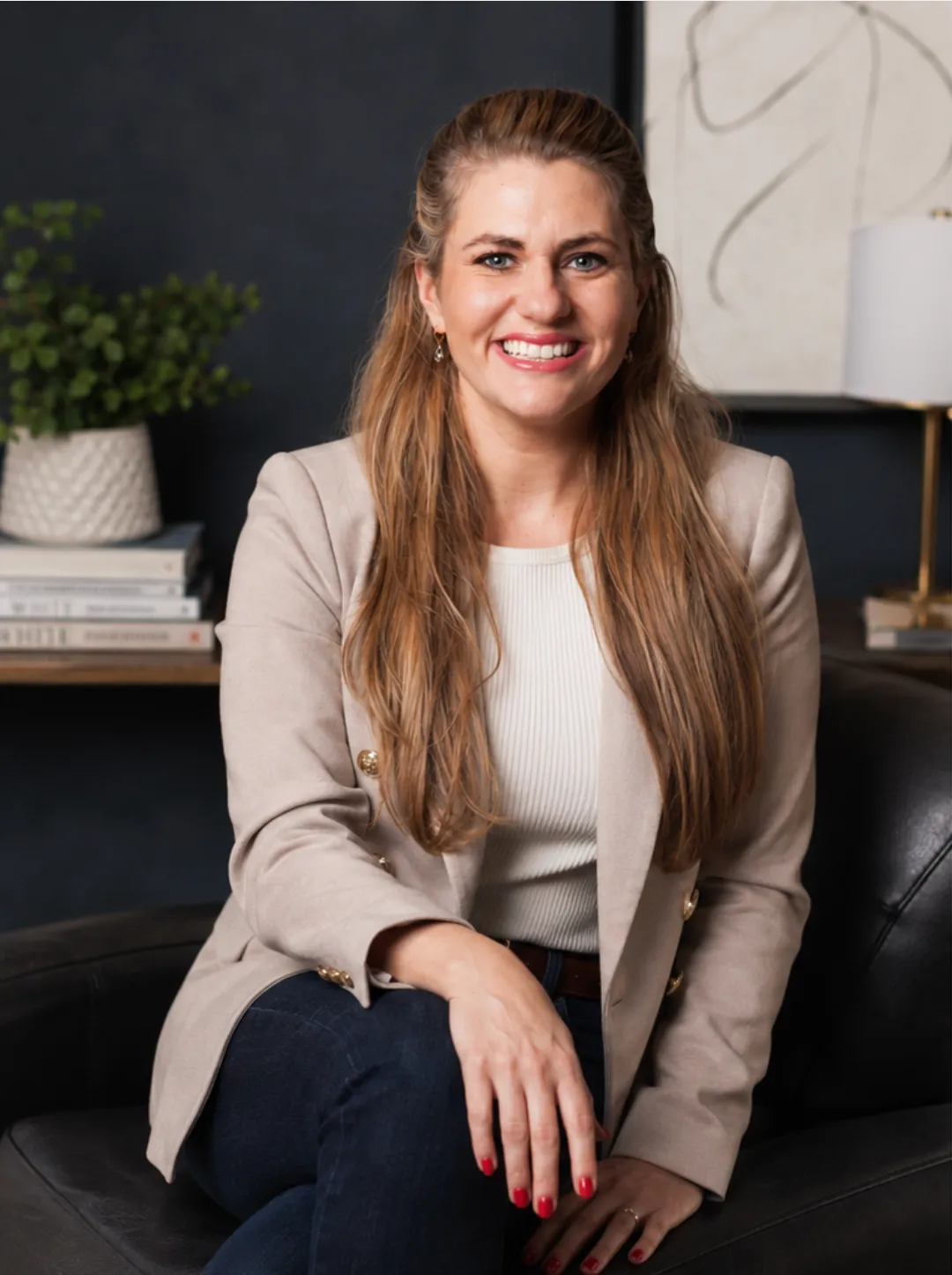
Mandy Hornaday: Hey everyone, welcome back to Growth Activated. I'm your host, Mandy Hornaday, and today I want to walk you through the steps I'd take to build my fractional CMO practice back up to $40,000 a month in recurring revenue if I had to start over from scratch. Maybe you're considering taking the leap to fractional, maybe you're a year in and it isn't going how you pictured. Either way, this is where I'd start. Let's get into it.
Mandy Hornaday: So I had the idea to do this episode because unfortunately, so many people in my direct network over the last few weeks have come to me and shared that they've been recently laid off. And as a part of those conversations, I've always offered to help network and connect people with others in my network or with companies or hiring managers to help them break into some new opportunities. And one of the first questions I usually ask people is, what are you looking for? Are you looking for full-time or fractional work? And for the most part, almost everyone that I talk to says that they're open to both.
Mandy Hornaday: And to be honest, I always wince a little bit at that, because building a fractional practice is really hard work and in my opinion takes some incredible commitment and focus in order to build something that feels sustainable and something that is going to reap a lot of rewards in the long run. And now certainly, for those who are really just looking for some quick cash because they need to support their family in a time of need without a job, I completely get that and I support that wholeheartedly. And so this episode is not really for people who are just trying to make ends meet until they find the next full-time job. But for those of you who are genuinely interested in going fractional and working for yourself for the long run, then hopefully you'll love the tips that I'm about to share today.
Mandy Hornaday: Now, before we dive in, I want to share a little bit of a story, because I've been fractional now for about two and a half years and I sort of fell into fractional. I was one of those people who didn't really know if I wanted a full-time job or a fractional job. The idea of being fractional always appealed to me, mostly because I have a wandering heart and really wanted to be able to travel and work abroad. And I knew that being fractional would be one of the best ways to pursue that dream of mine. But I had no idea what I was doing when I originally built my practice. And early on, I certainly made my fair share of mistakes that felt like I had just built myself a second job, and one that ultimately was more miserable than a full-time job.
Mandy Hornaday: And one of the biggest traps I fell into that led to that was that at the beginning, I took on everything that came my way. Now I look back and I think I was operating out of a place of scarcity. I couldn't imagine turning down revenue if it was coming my way. At the end of the first year, I had roughly eight clients on average, I was billing 40 hours a week, and I was so exhausted and drained, way more than I was when I was working full time. And I hit a point where I almost abandoned being fractional to go back to full time, because to me, I hadn't cracked the code yet. I was undercharging. I was taking on work that was probably too small and therefore led to a pretty large portfolio, which ultimately led to a lot of decision fatigue and context switching.
Mandy Hornaday: So I was constantly moving from client to client to client to client in my typical work day. And not only was I unable to get real deep work done that felt meaningful to me and to the client, but I would end every day with a headache and completely burned out. And it was in that moment where I paused and I realized all I had done was build myself a second job, one that was not nearly as meaningful as a full-time job would have been at the time, comparatively. And so I took a pause and really evaluated and took these next four steps that I'm about to share. And that is what ultimately changed the trajectory of my fractional practice.
Mandy Hornaday: And just to fast forward a bit, about a year and a half later, once I made some major changes to my portfolio, I now feel like I actually have the freedom of being fractional. So I work from wherever I want. I don't work Fridays. I control my own calendar. I have a few marquee clients that sustain me. And then I also pepper that in with project-based work. And ultimately I've figured out the type of work I want to take on that I actually enjoy.
Mandy Hornaday: Now I won't sit here and pretend to be perfect. You guys know that's not who I am. I am still learning all the time, and I'm challenging the reality that I've built around me all the time as well. And in fact, I was offered a full-time CMO job just a few months ago that I heavily considered taking for a lot of different reasons and ended up not taking it, which is a story for another day if you're interested. But I am still personally actively testing the limits of what's possible with AI and whether that's going to change the work that I take on or that I want to lean into. And I'm still constantly pruning back on work that doesn't fit me anymore. But with all of that being said, let's go ahead and dive into the first move that I would make if I was rebuilding my fractional practice.
Mandy Hornaday: So move number one, I would set the vision for what I was looking to get out of my fractional practice. One of the major things that I've learned about being fractional is that it certainly has its trade-offs and it is hard work. And so if it's going to be worth it in the end, it has to be a business that you really enjoy and that is not going to burn you out. And so for me, the question I would be asking myself, and the question I frankly ask myself all the time, is how do I want to feel inside of my fractional practice?
Mandy Hornaday: And so a few things that I'm constantly looking at with every new season that I enter are, how do I want my week to look? What do I want my hours to be? Something I implemented about a year and a half ago and never looked back on is that I don't work Fridays. To me, the freedom of fractional means that I get three day weekends. And sometimes I use Fridays to actually invest in passion projects, or to experiment with AI, or even use the day to travel, because we are abroad and we have been for the last nine months and I want to take full advantage of it. But regardless, setting the boundary of not doing client work on a Friday has made my weeks so much more enjoyable and worth it.
Mandy Hornaday: Your version might look different. Maybe you want a flexible workday Monday through Friday. Maybe you want to be able to drop off and pick up your kiddos. Maybe you want to pursue your own hobbies. Whatever your version of freedom is, I would just encourage you to establish and set that vision up front.
Mandy Hornaday: Another big question I would ask myself in terms of how I want the work to feel is, who do I want to work with? One of the blessings about being fractional is you don't have to work with people you don't want to work with. I have turned down clients because I knew that we weren't going to be the right fit, or we weren't aligned with how we thought about marketing and branding, and it was going to be an uphill battle for me to be successful and productive in their environment. And I would rather protect my inner peace and go find another client who I'm aligned with than be stuck in a miserable client engagement.
Mandy Hornaday: And it may not even include just what types of clients you want to work with. It could also include, do you want to have a marketing team around you? Do you like being a solo fractional leader where you can run and own the end to end execution within a function? I personally like having a team around me. I don't enjoy engagements as much when I am the solo marketing leader. It doesn't mean I can't do it. It just means that I feel lonely. I like having a team that I can collaborate with and work alongside, but your preference might be different. And so I like to think about, what is the working environment that I want to be inside of? Because again, part of the freedom of fractional is that you get to choose what you want to surround yourself with.
Mandy Hornaday: And the last question I ask in terms of vision setting, that I think is really important in terms of how you want the work to feel, is what is your risk appetite? So when you think about high risk being on one end of the spectrum and stability and secure and safe being on the other end of the spectrum, fractional work can flex in between that spectrum based on what you're comfortable with. So I think of project-based work being on the higher end of the risk spectrum, but it's also tied to more revenue. So when you think of project-based work, you can usually charge double your hourly rate for the work you do, or frankly, even more now with AI, than you would with a retainer.
Mandy Hornaday: But a retainer, even though you might be negotiating a lower hourly rate or working by the hour for a client, you should still always be making more than you'd be making full time, and I can talk about that here in a little bit. But retainers tend to be more secure and safe. So I personally work with clients on anywhere from a six month retainer to a 12 month retainer, which can be nice because it gives you some of the income stability without having to constantly go out and find new business.
Mandy Hornaday: And you may flex to different sides of the spectrum based on the season of life you're in. In some instances, you may choose to only have a few marquee clients that you have some strong retainers for and you're locked in. You still get the benefits of being fractional. You still get the benefits of setting your own boundaries and work hours, but you have the stability that so many crave. On the other hand, if you're trying to optimize for revenue and you're in a season where you're okay with some risk, heck, project-based work can be incredibly lucrative. And frankly, you can probably make more money than you've ever made before.
Mandy Hornaday: Now in my world, I personally tend to sit kind of square in the middle of that spectrum. My preference is to have one to two marquee clients that are on retainer so that I know I've got stable income coming in. But then I always try and leave some open space to take on project-based work. And oftentimes the project-based work will also have the ability to turn into a longer term retainer. And so I've found that striking that balance works really well for my lifestyle and for my risk appetite.
Mandy Hornaday: And my last note on this section is, once you've really thought through what you would love for your dream reality to be within your fractional practice, I would encourage you to sit down and do some financial modeling in order to achieve what you want to achieve from a freedom and an income perspective. What needs to be true of your fractional portfolio? What does your ideal project versus retainer versus advisory portfolio look like? How many projects would you need to sign each month or each quarter in order to fill your project side of the portfolio? And vice versa, if you're going to go the retainer route, how many retainers would you need to have active in order to hit your expectations?
Mandy Hornaday: And if this is the first time you've gone fractional and you have no idea what you should charge from a retainer or a project-based perspective, a great rule of thumb to consider is to take the salary, the full-time salary that you could earn in the market today, and divide that by a thousand. So let's say the market rate you could yield today is 250,000 a year. Essentially your hourly rate should not be lower than $250 per hour. And then your project-based rate, I would say, should be double. So in that instance, you take the 250 and your project-based rate might be 500 an hour. Now, certainly these are just meant to be rules of thumb, but I've always found those to be pretty great starting places where you can kind of move up and down from there.
Mandy Hornaday: And the second consideration in your financial modeling that you should take into account is that your billable hours are not the only hours you're going to need to work in a fractional practice. A lot of fractional leaders that I know only commit to anywhere from 20 to 30 hours a week in billable work, because they know that in order to run their practice, you've got a lot of administration that has to be done. You've got business development and networking that has to be done. Maybe you're building your brand on LinkedIn. You know, there's a lot that goes into the work part of your fractional practice. And that's part of why the pricing mechanism is so important, because if you're only going to be billing 20 to 25 hours a week, you still need it to be worth your while as compared to full time.
Mandy Hornaday: Okay. So that is step number one that I would take. And frankly, that I take every couple of months. I'm always reevaluating what I want that next season of life to look and feel like, and how my fractional practice has to adapt and evolve in order to fit the lifestyle I want. So also don't think of it as a one and done thing.
Mandy Hornaday: So move number two, I would choose my market wisely. I would get really crystal clear on who do I help, at what moment, based on what's happening in their business. And what result or outcome do I bring as a part of that work? So we need to be marketing leaders for ourselves here. We need to figure out who our ICP is and get really crystal clear on who we want to sell to and the problems we want to solve. And for me, what has made this scalable without burnout is deciding the work that I love to do and really leaning into my true zone of genius.
Mandy Hornaday: My sweet spot is B2B professional service organizations that are roughly 250 to 350 million in revenue, and they have a three-year goal to scale to a billion plus. And in their current state, they have a marketing organization. It might be anywhere from five to 10 people, but their marketing organization is mostly a reactive support function, and the CEO really wants to evolve marketing into being a proactive growth engine, and they just don't know how to drive that transformation organizationally. They don't know if they're leaning into the right strategies, whether they have the right team and resourcing, whether they have the right plan to get there. And that is the problem that I love solving. It's the work that I love, and frankly I often get pitched to come back as an in-house full-time CMO in order to solve for it in the long run.
Mandy Hornaday: But what I've come to find is that deep expertise allows you to charge more, and it'll also help you convert more deals. You don't have to do as much context switching across multiple industries, multiple company sizes, multiple different challenges, right? Which ultimately then leads to decision fatigue, at least for me. Now don't get me wrong. I have experience in B2B SaaS and I have experience in startups and companies ranging from pre-revenue to 50 million in revenue. But what I've learned is that it's not really my zone of genius and it's not my area of passion.
Mandy Hornaday: Now, this is one of those areas that I'm constantly testing and pushing on, especially with AI, because AI has unlocked a ton of opportunities. But what I'm learning in real time right now is that just because I can do the work doesn't necessarily mean I should. And when I root myself back in my fractional vision of make more, work less, do it in a way that I can scale without burning out, what I've come to find is that I need to stay true to what my deep expertise and zone of genius is, in order to make more impact both on my own business and on the businesses that I serve.
Mandy Hornaday: There's actually this story that I remember reading about in this book, 10x Is Easier Than 2x, which is one of my favorite books, by the way. If you haven't read it, I would definitely check it out. But in the book, they talked about this story, and it was a factory that was running off of multimillion dollar machines, and one of the multimillion dollar machines had broken down and no one in the factory could figure it out. They had these different engineers that had come through that worked there. Everyone tried to figure it out and they couldn't, and it was causing them hundreds of thousands of dollars in lost revenue because they couldn't get the machine working.
Mandy Hornaday: And so they brought in a retired engineer, and the retired engineer walked around for a few hours. He spent the day there, and he ultimately took his chalk, put an X on one part of the system, and said, that's what you need to fix. That's where your problem is. He left and he invoiced the company that same day, and he sent them an invoice for $50,000. And the secretary at the time got the invoice and said, oh my gosh, you were only here for a day. You literally just put an X on the machine. How are you charging us $50,000? And the engineer said, I'm charging you $1 for putting the X where I put it, and I'm charging you $49,999 for knowing where to put the X.
Mandy Hornaday: And I just love that story, because it's such a great reminder that there is immense value in having deep expertise. And if we as senior marketing leaders know exactly how to help a particular company at a particular stage in a particular industry to solve a really important problem for them, we will ultimately be able to command more business at a higher rate. So just something to think about as you're getting clear on who you want to do the work for.
Mandy Hornaday: Now, move number three is figuring out how to leverage your expertise in a scalable way. And this is where systems and repeatable frameworks and expertise come into play for me. And I've seen this show up in some big ways over the last two and a half years. So one of the main projects that I do for companies is I will come in and do a 360 degree marketing assessment and build a transformation blueprint of how the marketing organization needs to evolve in order to help them hit the growth goals that they are after over the next three years.
Mandy Hornaday: Now, the first couple that I did took me a lot of time, to build my approach, to refine my approach, to really turn it into a repeatable process. It probably took me at least three of them, done in a compressed timeline as well, right? So I did three over the course of three months, so I was learning quickly. If I had done three over the course of a year, my learnings probably would have been a lot slower, but because I was doing it in a compressed way and learning quickly, I was able to build and learn in real time.
Mandy Hornaday: Now, fast forward after two years of doing this, I've now done nearly 20 for 20 different organizations, and coming into 2026, I had reduced the time it took me easily by half. I had a really strong process. I know exactly how to go about the assessment. I have a really clear method in terms of how I approach it. And let's not forget, I still charge the same amount, because to the client, it's still worth the outcome that they're receiving. So just by building a repeatable framework that I was able to use over and over and over again, and still balance customizing it to the client so that it was really relatable and impactful for them specifically, I was able to cut down the time just by half.
Mandy Hornaday: Now fast forward to the last six months with AI, and I've been able to cut the hours down in half again, because now I'm able to put my expertise and repeatable frameworks into AI and leverage it and scale that expertise. So for example, I have a pretty in-depth marketing assessment framework that tells me exactly the maturity of the marketing organization across a variety of different levers. And I rank them on a scale of one to five, and I've got very clear definitions for every box on this matrix, if you can imagine. So let's say there are 20 different levers I'm measuring them against, and I've got one to five from a maturity perspective across all 20. Every box in that matrix has a description of what the client looks like at that phase.
Mandy Hornaday: And so you can imagine how easy it has been to take that depth and that framework that I've clearly defined and leverage AI to use it at scale. Now AI can subsidize and do a lot of the research for me, and take all of my interview transcripts and all of the intake documentation that I do. And it can actually come up with the scores for all of those areas, rooted in my personal methodology and expertise. And even after I've cut the time again by half, I am still able to charge the client what I originally charged heading into this new year. Because again, the outcome is still worth it to them.
Mandy Hornaday: And so hopefully you can start to see a trend here. The more focused we get in our fractional practice, whether it's the particular projects that we do and we run over and over and over again, or the types of organizations or the industry or the company stage, whatever it is, the more repetitive you can get, the faster you'll be able to scale your IP and your frameworks and your systems for how you approach each of those environments. And ultimately unlock the freedom of, do you want to take on more client work as a result without burning out? Do you want to make what you're making now, but work a lot less? Do you want to keep the clients you have, but charge more? I mean, ultimately the opportunities are endless, but it all comes down to that level of focus and prioritization and building deep expertise in a way that provides immense value back to the marketplace.
Mandy Hornaday: Okay. And last but not least, step number four I would take, and I'd be crazy not to talk about it, because finding clients is one of the number one reasons why people abandon being fractional. As marketing leaders, we don't necessarily love to do sales and business development, which is completely understandable, but it is an incredibly important part of running a fractional business. So I've personally had luck diversifying where my business comes from.
Mandy Hornaday: And truth be told, I have yet to ever do outbound to pick up new business. Major respect for those of you who are out there grinding and building your portfolio in that way. It wasn't something that I have needed to do up until this point. However, in a future season of my fractional practice, if I wanted to lean in really heavy to repeatable project-based work and move away from retainers, I would probably lean into the outbound side of business development if I needed to. But I've seen the most success as a combination of my existing network and partner networks.
Mandy Hornaday: Partner networks can be vast and wide. I like to think of them as partners who are going to bring work to you. And so marketing agencies can be a great partner to bring work to you. I am actually on the bench as a fractional CMO for an agency. They do end to end marketing work and execution, but they don't necessarily have in-house fractional CMOs. And so they've got a bench of fractional CMOs and I'm on that bench. When I first went fractional, they were constantly bringing me business, which was huge because I really didn't want to have to do a bunch of business development.
Mandy Hornaday: You could also consider partner networks within PE firms or VC portfolios. A lot of times, VCs or PE firms are looking for tried and true fractional executives that they really trust, and they will bring you into all of their new portfolio companies. And so if you've worked at companies who have been owned by VCs or PEs, that's a great place to start, especially if you've built a great reputation. I would absolutely network and build strong relationships in those areas.
Mandy Hornaday: And then certainly marketing communities like an Exit Five, or fractional CMO communities where they will source out the work to the fractional CMOs in their network. And those can be great as well. And then last but not least, honestly, one of the best partner networks that's completely free and doesn't cost either party anything is to network with other fractional CMOs. I personally have turned down work and instead looped in other fractional CMOs in my network who I thought would be a great fit. And I've had others do that for me.
Mandy Hornaday: In fact, I just had someone email me this morning saying that she had decided to make the plunge to go back in-house, but she currently had a fractional CMO client that she was hoping to introduce me to if I was open to new work. So fractional CMOs can be an amazing network, and it can also make the work feel less lonely and let you share great tips. And so I would highly recommend building your own network of other fractional marketing leaders.
Mandy Hornaday: Now, the other big channel for me outside of partner networks has been my personal network. So over the last couple of years, I have made it a part of my normal operating rhythm to consistently stay connected to some of the other senior leaders I used to work with. We'll have coffee chats, you know, once or twice a year. I'll check in with them on LinkedIn, and usually not with an ask, but just to genuinely see how they're doing, how things are going. I will comment on their LinkedIn posts that they have out. I mean, ultimately I'm just highly intentional about keeping those networks alive, even though I have no idea what it will bring or when it will ever bring any business my way in the future. But I will say I've had some major marquee clients come directly from staying in contact with my networks.
Mandy Hornaday: Now your version of building your portfolio might look completely different. My biggest recommendation here though is to diversify the channels in which business is coming to you, and be really intentional about warming and managing each of those channels as a part of your weekly or monthly operating rhythms. It's always more advantageous to be in the position where you are having to turn down business because you're too busy, but you're keeping those networks alive, versus not having any business and having to go out and pick up as much business as you possibly can. So whatever you do, just be intentional about making sure you know where the work is going to come from.
Mandy Hornaday: All right. And that pretty much wraps up the four tips. So tip number one, set the vision for what you want your fractional practice to look and feel like. Let that lead everything else downstream for how you build your practice. Step number two, pick one area to focus on. Who do you help, at what moment in their business, and what results or outcome do you bring? Step three, figure out how to turn your expertise into a repeatable, scalable system. And AI can be great as the underlying engine for doing this and scaling your practice without burnout. And four, make sure that you have a diversified engine for how you drive new business into your portfolio, so you don't feel like you have to abandon being fractional and go back in-house just for the stability.
Mandy Hornaday: Awesome. I hope this was helpful. I hope you picked up some new tips or tricks today. And if you're interested in going fractional and you'd love to get more information, feel free to reach out to me on LinkedIn. Always happy to share my tips and my learnings and the scars that it took in order to get here. All right, everybody, in the meantime, as always, keep activating growth for yourself and your company. Have a great day.