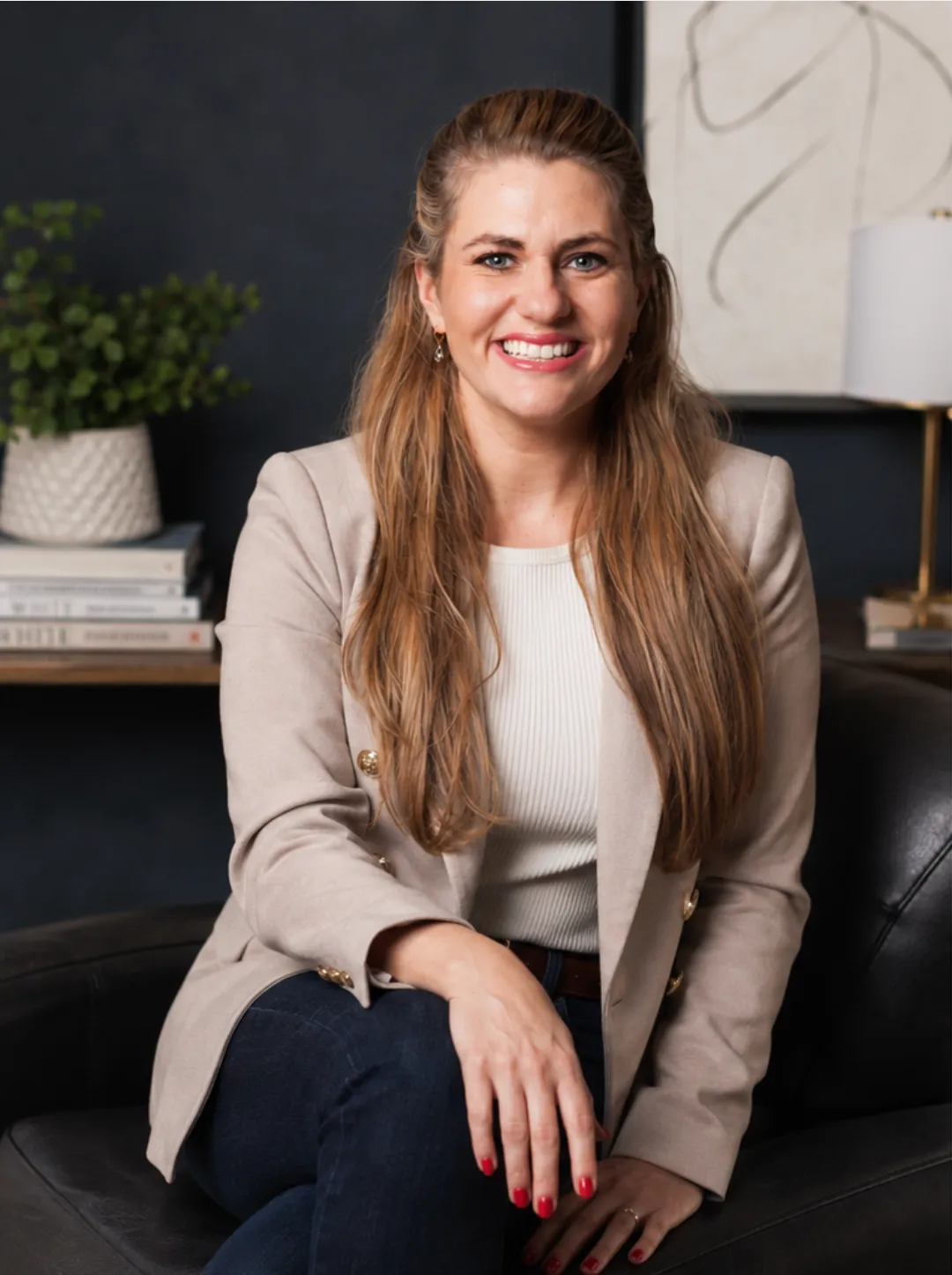
Mandy Hornaday: Right? Okay. Okay. Amazing. Hi, Liza. Welcome to the Growth Activated Podcast. We're so excited to have you here today.
Liza Adams: Yes, it's Liza.
Liza Adams: Hi Mandy, thank you for having me. I've been looking forward to this.
Mandy Hornaday: Me too, it has been a long time coming because I believe it or not, I know we spoke for the first time probably three months ago and during that call that we were having to just sort of chat and me learn from you, I had my own little shit moment when you pulled up all the automated workflows and team members within a marketing organization and. It sent me down this path where I ended up spending, I was in Wales at the time that we spoke and I ended up doing like this weekend hackathon to really dive into Claude Code and start to immerse myself. So you've been a huge inspiration to me. Yes, I did a podcast on it. It's one of my most popular episodes at this point. And I know everyone's really excited to hear from you because I did mention you on that podcast as one of my sources of inspiration. So thank you for inspiring.
Liza Adams: Thank you. Well, I'll have to listen to your podcast because I'm sure I'll learn something from what you did. So.
Mandy Hornaday: I don't know about that, but I learned so much from your newsletters and it's just such a, I'm so excited to pick your brain today. So, Liza, I'd love to start with when you think about AI in marketing and in all the things that could be done, I would love for you to sort of set the vision for us as CMOs. Maybe everyone's at different, very different stages of their own AI journey. And it'd be great to just learn, like if people were to follow what you're gonna teach us in terms of organizational transformation, like what is the end game? Like what is the real today, future state that can be created that you think CMOs should be keeping in mind?
Liza Adams: Yeah, so I love Simon Sinek's Golden Circle, right? It's the why, how, what. And I think nowadays we get enamored by the tech and we focus so much on the how and we focus so much on the tools and the magic of AI, right? But I think we need to have some grounding principles so that we can make better decisions as we move forward. And some one of my key principles is people first AI forward and What that means to me is that we apply a people lens in every AI decision that we make as we use AI To push us towards work. That wasn't possible before not just faster work and You know when we are people first AI forward that means that we're committed to upskilling and re-skilling people and when we upskill and re-skill people, we give them a gift, right? It's a gift of being able to compete in whatever comes next, whether that's in a new role, in a different team, or in a different company. So understanding that AI can have a lot of benefits to the business is one thing, but... know, ensuring that people are secure in their careers moving forward, even if it goes beyond the company that they're in today. So that's first and foremost in my mind. And then for CMOs, and you know, I was a former CMO and I lived this throughout my multi-decade career, we won't say how many decades. You know. The tech is amazing, right? And it could be used for good, but it could also be used for bad. But I always anchor it on the customer. We talk about improving productivity and efficiency with AI, doing more with less, and those are all good places to start. However, anchoring it on how
Liza Adams: customer behaviors and their buyers' journeys and how they make decisions are changing is going to be super important, right? Because when we have that kind of foundation, then we can figure out how we can better serve our customers. That has always been our North Star. And better serving our customers nowadays might mean using AI. And in many instances, it will mean that. So when we anchor there and then we figure out how we can better serve them moving forward, As our teams become more hybrid, meaning that they will no longer just be a bunch of humans, we will now be a combination of human and AI teammates, then we have a true purpose and we are not deviating from our North Star. you know, those two things from my perspective, if we can anchor on those, it will be a lot easier to make decisions moving forward when it comes to technology and change management.
Mandy Hornaday: Yeah, yeah. with the first one that you were talking about with upskilling and re-skilling, I am curious, because I think there's this broader question. I have it for myself. But what's your perspective in terms of the burden on the company to be in charge of upskilling and re-skilling around AI, their internal employees, versus what burden should be on the individual to learn maybe outside of work or to sharpen their skills. I'm curious, sometimes it feels like, I'm sure you hear this all the time, it's like we have such a hard time making time to learn AI and to implement it in a lot of ways. And sometimes it feels like if you don't do it on the nights and weekends, it's just not going to happen. So I am curious to hear your perspective on that.
Liza Adams: Yeah, Mandy, and I think it's an interesting choice of words, burden on the company and burden on the individual. And I'm not judging you, by the way. I just found it interesting. I actually believe that it's a responsibility. It's a fiduciary responsibility of the company to upskill and re-skill people.
Mandy Hornaday: Mm.
Liza Adams: We hired the people to do a specific job when the market was something different. Now the market has changed and I think it is our responsibility as brands and as companies to help people evolve with the market, right? And put them in a position to better serve that market and to ultimately compete. And there's so much to be said about upskilling our own people and re-skilling them versus hiring from the outside. And those are some key considerations that we need to think about as brands and as companies. There are certain roles where you need the experts right away, right? And we're going to pay highly for that because there aren't that many AI native experts out there. The generative AI for the masses has only been around three plus years. So, you know, for someone to say, I need somebody who knows generative AI and has done this for 10 plus years, it's kidding themselves, right? And there's also, there's a lot of value in our existing people who deeply understand. the culture, the customers, how things work, what makes the company tick, the soul of the business, right? And those are really hard to replace, especially if you're simply expecting AI to do work faster. So I think it's truly a responsibility. here's my fear. My fear is that we're all working in a pressure cooker. Right? And upskilling people, change management takes time. It's not easy. The hardest part of AI transformation is in AI. The hardest part is human change management. This is around shifting mindsets and behaviors, putting hands on keyboard, giving them space to learn, not just tacking it on, on top of what they do on a daily basis. You know, I have CMOs reprioritizing the work.
Liza Adams: in, you know, deeming certain days of the week or hours as time to learn and use AI. I have a CMO that does thriving Thursdays and failing Fridays where they get together and share what worked and what didn't work, right? And she has reprioritized the work so that they are creating the space and she is...
Mandy Hornaday: Hmm.
Liza Adams: aligning new workflows to strategic initiatives so that they have a better shot at succeeding. So those things are hard. My fear is that the pressure cooker is going to intensify. And when we're under pressure, we can't be our best selves and we make rash decisions and we get pressure from CEO and the board and so on. And I fear that we won't have the time to give people the space to learn and the opportunity to upskill themselves.
Mandy Hornaday: Yeah, I love the term, I guess, pressure cooker. feels very real. Where's the pressure coming from? Where do you feel like the pressure is really closing in? Is it to be AI forward and have deployed all of these agents and workflows and things like that? Or is it to have an AI strategy or something else entirely?
Liza Adams: I think it's much bigger than that. The technology is one thing, right? It's moving fast, it's upending a lot of traditional beliefs on its head. But we have... economics, right? And we have geopolitical challenges. We have all sorts of things where when business models change and when the market shifts, many companies, I believe, are starting to lose product market fit, right? The market has shifted, but the products have not shifted. And the go-to-market strategies have remained the same. And when you lose product market fit,
Mandy Hornaday: Mm-hmm.
Liza Adams: There's a lot to be untangled there. Because you can have the best AI, can have the best strategies and best messaging and positioning, best campaigns. Those things could be awesome, right? And I actually use this analogy quite a bit is you could use AI to help you with personalization and do integrated campaigns and offer all sorts of content. But if you lose product market fit, It is like doing an all-out campaign for snowblowers in Florida, right? You know, it will never land. Because now the market is not viewing your product as something that can solve their problem today. So I think by and large that is, you know, contributing to it. And product market fit right now is happening. you know, we constantly have to pulse the market because it's shifting so fast that we have to consistently ensure that we're still, that the ICP is still what it needs to be, right? So given all that, plus the pressures of, for example, know, a PE back company, know, sustained profitability, rule of 40 or rule of 60, whatever it is now. And then there's public companies that are
Mandy Hornaday: you
Liza Adams: judged on a quarterly basis. That's diametrically opposed types of metrics to change management that requires multiple months to happen. You gotta change the mindset and then the behavior happens and you have to do it consistently. It's hard to rationalize those two pressures.
Mandy Hornaday: Mm-hmm, mm-hmm. Yeah, absolutely. And then customer behavior changing so much for sure, which I know you had mentioned as well. So it's a lot to keep a hold of for sure.
Liza Adams: Yeah, absolutely.
Mandy Hornaday: Fascinating. Now, I'd love, Liza, to talk a little bit about one of the charts that you shared with me on our original call, just sort of transferring into the AI organizational, team organizational, I guess, transformation. One of the things that was really interesting to me is you talked about like four dimensions of growth within AI. And you had this really great chart that... kind of broke out, was a matrix, if you will, of breaking out the different areas to leverage AI. Could you walk us through that? Because I think when I, that really helped me. I'm someone who like really responds well to frameworks. And I think it helps just sort of self assess and or assess our teams in terms of like the current state of their AI leverage and maybe comfort and usage.
Liza Adams: Yeah, and Mandy, my frameworks are not best practices, right? They're, you know, I always say best practices come over time. And I don't believe that there are many AI best practices yet because it's evolving so fast and we're moving with it, you know, we're learning with it. But my frameworks are coming from a place of from a practitioner's perspective and from a place of seeing patterns, Pattern recognition, working with a number of marketing teams. So what I'm observing right now is the teams will build based on what they perceive AI can do. And that's a limitation, right? And you know, There are four mindset shifts that need to happen in my mind before the team truly embraces what AI is capable of doing. The first one is around shifting the mindset from primarily using AI as a question and answer machine or a fancy search engine to a thought partner or a sparring partner, right?
Mandy Hornaday: Okay.
Liza Adams: And the reason why I say it's important to shift the mindset before I go into that thought partner piece is, you know, in the early days of the smartphone, like we all thought that this thing is just going to be a fancy way to make phone calls, right? That, you know, it's a flat screen, it's a touch screen, and then we realized that it's a wallet, it's a GPS, it's a music box, it's a camera, and if you want it to be, it could be a baby monitor. right? And then we change the way we work and live around it. And in fact, today, I use it the least for making phone calls. I use it for all of those other things. And same thing with AI. If our teams primarily use it as a question and answer machine in a fancy search engine, then that is all they will ever build with it. And there's a huge gap between you know, question and answer machine where ChatGPT or in Claude, it says, ask me anything in the conversation box and one where it's fully integrated workflows with human and AI teammates working together, re-imagining the work. That's a Grand Canyon between ask me anything and fully automated systems, right? So the first mindset shift is really thinking about AI as a thought partner and as a sparring partner. This is about being comfortable in being wrong and asking AI to challenge our assumptions and evaluating our content and giving us other opinions. there's something liberating about... being okay with being wrong and being so intensely curious on the reasons why. And if we can tweak AI as a sparring partner, I think we will have much more nuance and much more richer thinking to back up our strategies and our content, right? So that's one thing. The next thing is around primarily using AI to do things faster.
Liza Adams: improving productivity and efficiency and doing more with less. I actually believe that that should only be the floor of what we can do with AI. And we hear many CEOs say, hey, we need to improve productivity. And I think it's great. But I think it needs to go way beyond that. Because if we simply train AI to do our existing work faster, you can almost project how we can automate the human out. Right? So we need to actually push AI to help us improve the quality of the work and then ultimately help us reimagine the work so that we're actually doing new work that wasn't possible before that actually grows the business. So, you know, we're at that Henry Ford moment where you can't reimagine the future by simply automating the past. Right. And in
Mandy Hornaday: Yeah.
Liza Adams: You know, I can't see a situation where we're being so productive, but we're not growing the business and we still require more humans. Like that's literally impossible. Right. But if we are now doing new work.
Mandy Hornaday: Yes.
Liza Adams: that is growing the business, we're reimagining what this thing looks like, then humans are essential, right? And then we can improve profitability and so on. So that's the second mindset shift. The third mindset shift is around primarily using AI as a tool, like a chatbot.
Mandy Hornaday: Yeah.
Liza Adams: like many use today, right? To building and guiding AI teammates, meaning that we actually train AIs to do specific work, and they are trained on our unique expertise and our unique company knowledge, and they are part of our jobs, right? And then ultimately, being able to orchestrate multiple AI teammates into a workflow. you know, not just in productivity workflows, but also in reimagined workflows, like I mentioned previously. So that is a big shift from AI as a tool to teammate, and then ultimately orchestrating AI workflows. And then finally, the last mindset shift is around going from hierarchical and siloed organizations to organizations that...
Liza Adams: there's no daylight between functions, right? Like they begin to converge and it's now about outcomes and less about functions. And what I mean by that is, I always reference the Harvard study. with P&G professionals where they gave cross-functional teams AI. And the result of the study was that the people in these groups began to care less about the boundaries of their job because AI doesn't care about our roles, our titles or our functions. It only cares about the outcomes. So in the world of marketing and go-to-market, AI doesn't care about marketing, sales, and CS. It only cares about the overall outcome and the customer experience, which is great because our customers don't care about our silos. They only care about the experience, right? So I actually have a lot of hope for customers in this case that seamless customer experience will now be table stakes. And those that are not able to provide that will be... in a difficult position to compete moving forward. anyway, those are my principles of shifting mindsets. And once people grok those four principles or mindset shifts, then it gets a lot easier in helping people figure out how we can best use AI going forward.
Mandy Hornaday: Wow, interesting.
Mandy Hornaday: Yeah, no, super, super interesting. And one of the things that I've been challenging myself a lot on a lot lately is how can I go from, how can I, you know, I guess when you take sort of your strengths and you dump them in, like, I don't want to necessarily go from an A to an A plus using AI. I want to go from like a D to a B or to an A, right? And like have that jump. And for me personally, Product marketing has always been a gap area of mine because I'm much more of the demand gen side and the operations that's sort of where I came up in. And AI has been so powerful for me to like fill in those gaps and still have my business and customer hat on. But now the capabilities, my capabilities are so much stronger because I have this tool behind me. So it's been really challenging myself and I saw myself in a lot of what you were describing in those four mindsets of like how can we really reimagine, I guess the work that's being done and how to do it and I love your point about the outcome over the task too. And I noticed that too, when you, I don't know about you but I know myself, like when you get started on something you're driving to an outcome, it also then, can send me into a little bit of a spiral, because it's like, oh, then I need to do this, and then I need to do this, and then I need to do this. And all of a sudden, you've now just given yourself like 20 things to do.
Liza Adams: Yeah, absolutely. you know, many people say, hey, know, AI has allowed me to save time and I do a lot of my work faster. I actually am working more. But it's not working more in areas that I don't like. I enjoy the work that I'm doing because it's the stuff that, you know, it's the strategy, it's the thinking, it's finding out new things.
Mandy Hornaday: Yes.
Liza Adams: And it's expanding my knowledge. It's the growth mindset, right? Versus the tactical things. So, you know, I really just love the fact that, you know, we continue to grow, use responsibly. I think our curiosity will allow us to continue to grow as a human being, right? We learn about other people's perspectives because as humans, we generally have, you know, we're beholden to our truths. We have our own assumptions and we're belly button gazing and it's hard to get different perspectives unless you talk with lots of people. And then now, I still believe that we need to have different perspectives and we need to take those other perspectives into consideration, but it gets a lot easier because we can ask AI, for example, how might a... How might someone in different phases of their buyer's journey perceive my messaging? Or how might this newsletter be perceived by someone who's a skeptic versus someone who is AI forward? Then you can, it's essentially challenging your beliefs, right? And then you can determine, you know, how you zig and zag or course correct and maybe have a more nuanced or richer point of view as a result of understanding other people's positions. So.
Mandy Hornaday: Yeah, I actually was just thinking this morning, man, I should create like my own buyer agent that vets all of the work that's being done and really like challenges me from my actual, from the different buyer personas. Cause I work in an industry that has a lot of different buying personas. And so sometimes I find like my teams will get locked in on a few of those, but we're not thinking about. all of the different angles and how all those different buyers will perceive what's being shared out. So it's really interesting.
Liza Adams: Yeah, that's actually an exceptional use case for AI, mainly like simulations, Buyer simulations, you have...
Mandy Hornaday: Mm.
Liza Adams: a financial manager persona, IT manager persona. You can even have like your buying committee, your decision maker, your influencer, ratifier, user champion, right? And then you can have your digital twins. So I have a digital twin. I have a couple of them, one in ChatGPT and then one in Claude. It's trained on my, my frameworks, my newsletters, my approaches, case studies, best practices, beliefs, purpose. LinkedIn profile, I did deep research on myself and it, know, AI output, like a 28 page research report on Liza Adams. And I'm like, my God, that became knowledge for the digital twin, right? And the way I use my digital twin is not necessarily to do my work, but I.
Mandy Hornaday: and
Liza Adams: You know, on days where I can't be my best self, the digital twin challenges me. And I say, hey, what did I miss? Right? Because as humans, you know, we can't perform at the highest levels every single day. But because it has so much knowledge about me and when I'm, you know, testing my ideas, I could say, you know, based on my best practices, did I miss anything here? So I just think we can really elevate ourselves. And AI can help us overcome our weaknesses. And then likewise, we can overcome AI's weaknesses, right? AI doesn't have a moral compass. It also doesn't understand, you know, context in our environment. That's why I have vetted a lot of things. So, you know, when you put humans and AIs together and use responsibly, and use them responsibly, I think we can achieve so much more.
Mandy Hornaday: Yeah, yeah, totally agree. So Liza, I'd love to transition a little bit into the transformation journey, sort of the journey to transformation, because I have to say, like, while I was so inspired back in, I think it January, February, and I did a Claude Code hackathon, I have not opened Claude Code back up since. Now, I've been in co-work and I've been doing other tools and things, and I've definitely leveraged AI a lot, but I... I also see this in other peers and teams and I've heard hearing that this is happening. Like we get excited, we go all in, maybe it's a day long workshop or whatever it is, or we spend a weekend and then it's hard to maintain. And I see this in teams too, right? Where we, or even in teams where they're kind of building separately, they're building their own thing and we're not kind of bringing everyone together. So when you think about... how a CMO can kind of bring their organization through real meaningful change with AI. How do you see that in terms of like the different phases and how we can really be shepherding people through?
Liza Adams: Yeah, and we talked about change management and its journey, right? And the very first part of this is really that mindset shift and grounding it on customer behaviors and the changes in the buying patterns and showing them what's possible, right? Once you shift the mindset, we have to actually show people what's possible. What I talked about those four mindset shifts, I'm like, okay, what does that mean? What are the applied AI use cases, workflows that, give me some examples so I can wrap my head around it. And then you show them what a human plus AI organization might look like, right? And how we have complimentary superpowers. So there's a lot in that foundational phase of it.
Mandy Hornaday: Yeah.
Liza Adams: Right? And then ultimately, once they see what's possible, humans, you know, we're not stupid. You know, we just need to see. The body does what the mind believes, right? So now you believe that this thing can be a teammate, this thing could be a sparring partner, and they could be orchestrated. Then now we put hands on keyboard. So we do hands-on keyboard workshops or give them the time to actually test and experiment with AI. I do these workshops where, let's just say there's 20 people in there. We come in as 20 humans. We come out as 40 members because now each human has created an AI teammate. So now we're. We're 40 members strong, right? And not all of those teammates are good. Especially the first ones that you build, my first one was crap. But it's okay. It starts to build the confidence that we can do this, right? So, but that's just the starting point. Like you shift the mindset, you show what's possible by function and marketing.
Mandy Hornaday: you
Liza Adams: because you can't just show marketing ops use case to a product marketer and you can't show field marketing use case to a digital marketer. You kind of need to show them by function. They put hands on keyboard and then now hard work happens, right? Because it has to stick. Now people are really excited. They got the confidence to build. They have one or two teammates. The hard work happens in the consistency in the support. of the leadership team and showing, know, highlighting trailblazers, right? I lean in on trailblazers. There's got to be like a handful of people in your organization that who are leaning in hard, right? And they're intensely curious and they're already, you know, reimagining the work. And these people hold on to them tight and elevate them in, you know, show others through the trailblazers what is possible, right? And those trailblazers will begin to mentor others and they will help drive momentum. So that's one of the things that needs to happen during that change management process. Again, as I mentioned previously, we prioritize the work and give people space. to learn, safe space to learn, right? It's okay to fail because even in failure, we learn a lot of things and we need to understand the limitations and the possibilities with AI and that bar continues to shift every single day. Like every single day, I'm like, my gosh, I didn't realize I could do that. no, I can't do that. What it can't do today, it can do tomorrow. So we just keep going, right? And that's why failure is okay because that failure today is a success tomorrow, right? So do those things. I have a number of teams. They have dedicated Slack channels or Teams channels where they share what works and what doesn't work, right? They have show and tell days.
Mandy Hornaday: Yeah.
Mandy Hornaday: Yep.
Liza Adams: The CMO has, like I said, we prioritize the work and began to operationalize, right? Because this whole thing around, know, what I'm talking about here is like encouraging people to just build. There's this notion of democratized building centralized enablement, right? At the beginning, you really want everybody building. At least that's what my pattern recognition is now telling me. Because the people who are closest to the work are the ones who can reimagine the best because they understand the processes, they have lived through the environment, they know what's broken, they know what's possible. Not everybody can reimagine, but those closest to the work have higher probability of being able to do that, right? Not to say that top down, tops down doesn't work, but give the people the opportunity to actually reimagine their own work, right? So once you get everybody building and people get comfortable, you have a ton of teammates now, now in the change management process, the problem becomes different. It's now around AI sprawl. Because now everybody's built and you don't know what's up and you don't know what which ones are good and which ones are bad and this comes to the point where you know
Mandy Hornaday: you
Mandy Hornaday: how many do the same thing. Sorry, I didn't mean to get you off, but yeah.
Liza Adams: So when you do the same thing, you know, you just have a bunch of digital twins, nothing's, you know, orchestrated in the workflow. This is when like a hackathon, I call it a hackathon, but it's really more like a, you know, it's an extended period of time where people have maybe in a matter of two, a couple of months, people build. And then there's like a three or four day event where. everybody shares what they built, right? Or they share their best of the best. And then in that hackathon, people see what everybody else has built. And now the company is able to rationalize, use this hackathon to rationalize. have a marketing team that built over 300 AI teammates and workflows. They did a hackathon, and then now it's culled down to like 57. Because to your point, not all of these teammates were good, right? Some of them were duplicates, some of them were just digital twins, some of them weren't integrated into workflows. So the 57 were the best of the best that were now being integrated into daily workflows. And then people now understand which ones they need to use, right? And how they need to assess those teammates and ultimately track the performance. of those workflows. So that hackathon is the beginning of like the scaling and the sticking part, right? And in conjunction with that, there needs to be like a governance team that actually works with legal and IT and finance because, you know, once we begin connecting AI teammates to systems, like HR systems or CRMs or marketing automation platforms, all bets are off on the building, right? Because we can't give every single marketer read and write access into Salesforce or HubSpot.
Mandy Hornaday: Right.
Liza Adams: That is now something that needs to be governed and enabled by a team. And in some teams, it could be marketing ops, could be rev ops, it could be a cross-functional team, but this team needs to have a little bit more technical abilities to build those connectors and then to ultimately work with the right departments to ensure security, to ensure compliance, and also ensure that we're managing costs because every time you hit those connectors, those APIs, this is no longer a $30 a month, you know, all you can eat buffet. We're now like, you based on the tokens, right? So the economics of this comes into play. And I've actually had one team, you know, say that in certain use cases, they've, they've determined that buying a specialized SaaS tool,
Mandy Hornaday: Yeah.
Liza Adams: is more cost effective than building it using a foundational model. So that's a consideration, right? Like our tech stacks now to really be thought about, not just costs, but also, hey, do we have the people to maintain this? Are we going to be able to keep up? Is there a vendor lock-in and all sorts of things. So anyway, that whole scaling thing is a whole different animal.
Mandy Hornaday: Yeah.
Liza Adams: than the building and experimentation and giving people confidence to build.
Mandy Hornaday: Wow, wow. Well, I have picked up so many ideas to sort of bring to my own teams. I love it. Liza, I'm curious, do you find that CMOs are struggling, are there CMOs out there that are struggling that you've encountered because there's too much governance in place? And if anything, like their IT and security teams are maybe overprotective and they're not actually able to... to build and test or is that really not something that you're seeing much of today?
Liza Adams: You know, I have empathy on both sides, right? Like, I'm so empathetic to the CMO who is trying to inspire what's possible, change the way marketing is perceived. truly changing the way we do work because I've been in that seat, right? Like you understand what's, you know, that we can unlock so many things and we can serve the customers better when we can do these amazing things with AI. But at the same time, I have empathy on the governance side as well, the legal, the IT and the finance, right? Side because once, you know, these AIs are no longer just chat bots. You know, it's not just ask a question and get an answer. And it's not just, they're no longer just reasoners where they can solve problems, right? They're now agents. Agents do things on our behalf. They can now navigate our files. They can use our browsers. They can use tools. They can, you know, output a document and put it on a drive. They can send emails on our behalf. You know, that requires a lot of trust to let an AI do that, right? And there are certain things, know, Brice Challamel, who was the former VP of Innovation at Moderna and is now the head of enterprise adoption at OpenAI has this framework, which I love because it's not just about the impact of AI to the business, but it's the risk.
Mandy Hornaday: Enough.
Liza Adams: of AI if something goes wrong. So, and the risk is, it's like two dimensions. And the dimensions is, one dimension is who is it affecting? The individual all the way to the company, right? And then the other dimension is the level of impact of that risk. Is it just, you know, mildly annoying to catastrophic, right? And
Mandy Hornaday: Mmm.
Mandy Hornaday: Yep.
Liza Adams: This is something that the company needs to think about. If it's just like, hey, if it fails, it just affects this individual and it's mildly annoying, fine. Okay, no problem. But if we now start building workflows and AI teammates orchestrated together that is company-wide and could potentially be catastrophic because it's a whole email that's sent to all of our customers with the wrong messaging and the wrong position, whatever it might be, That requires a lot more governance from a cross-functional team. So I think this whole notion of really segmenting not just what's great for the business, but impact to the business if it goes wrong is something that we still need to catch up in understanding, right? So, you know,
Mandy Hornaday: Yeah.
Liza Adams: it's a really, really hard line to walk. And I think if we can have a think big, start small, move fast approach, where we begin to say, you know, from the governance side, okay, I'll give you a little bit of this, right? You know, let's try this, and then begin to push where that trust factor, we're more okay with more things than awesome. But I worry about going so big, so fast, and not realizing all of the potential risks to the business. and you know, our risk tolerance is different depending on our situation and size of the company, public versus private and all sorts of things, right? And what kind of business we're in. Some smaller companies, know, many of them have nothing to lose, everything to gain. So go for it. They're going for it, right? And especially if,
Mandy Hornaday: Yeah.
Liza Adams: You know, there's limited resources and limited budget. They have no other recourse but to reimagine work and do things very differently. But if you're in a larger company, you know, there's lots of processes, you're protecting a lot of customer data. That's not an easy transition to make because we need to really think about the risks associated with it. Does that make sense?
Mandy Hornaday: Yeah.
Mandy Hornaday: Absolutely. Actually, one of my, it reminds me of one of my favorite operational books I read. It's actually for IT operations, but incredibly applicable across the business. It's called the Phoenix Project. I don't know if you've ever heard of it, but they talk about this concept, very similar concept of like, what is the risk of the work being done? And if it's low risk, it was really, at the time it was sort of translated to don't be a micromanager. leader, right? Like get out of your team's way, especially for low risk things. But the higher the risk, make sure you put in the right approvals and different peer reviews. so it actually, I remember I saw that graphic in your newsletter and it totally reminded me of, this was an exercise. It's sort of a great evergreen exercise to ask ourselves as leaders to encourage your team to take more risks within marketing where they can and where it's low impact. to the organization. So it's great. I really enjoy it. Liza, I'll... sorry, go ahead. No, no, go.
Liza Adams: No, I was just saying, think this time in AI is pushing us to really think about situations in a more nuanced way. I came from product marketing, so it kind of comes naturally for me to do segmentation. There's no black or white answers. right or wrong, right? It's always like segmented and depending on the situation the answer, the right answer for that segment will come out. So anyway, I think it's going to be more nuanced, even more so moving forward.
Mandy Hornaday: Yeah, absolutely. Well, Liza, I could talk to you all day. I've so enjoyed this conversation. I know we're wrapping up here. I'd love to hear maybe just some final words of advice for CMOs out there. What do you wish more of us were thinking about? Or what advice would you leave us with?
Liza Adams: Yeah, I think really the people first AI forward mindset or principle is something that I hold close to my heart, Regardless of everything else that's happening, As leaders, we will always remember the people who we helped and where... you know, and how well they succeeded in whatever comes next, right? And, you know, we will rarely remember the product launches that went well or, you know, the big sales kickoffs, but we will remember all the people that we have helped along the way. And I think it's such an opportunity for us as leaders to truly make an impact now because we... Like I've been in this role, you know, in marketing and go to market for a number of decades. And it's those moments where I know I have helped somebody in their career that really stands out for me. Right. And there is no other moment that's bigger than now that gives us an opportunity to do that. So I'm like, take charge, know, like give them the gift of knowledge, give them a gift through upskilling and re-skilling and let the cards fall as they may. Right? Like, and not all of them will, will come along, right? I believe in the law of thirds, a third will lead, a third will follow, and then a third will find their own way. But you, at least as a leader, you have done your job to at least give them the right mindset and the right skills for them to make their own decisions. So that's.
Mandy Hornaday: Mmm.
Liza Adams: That's my like parting guidance, guess, unsolicited by many.
Mandy Hornaday: No, no, it's a really great reminder, I think, in a time where we are, we probably wish that the people on our team were more AI forward or farther along. I think it's a really good reminder just to stay close to the people that you have. And I love the law of thirds. That's really interesting too. So awesome. Well, thank you so much, Liza. Obviously, people can find you on LinkedIn. Where else can they learn from you? You are so generous with what you share and all of the knowledge that you make public for free. So where can people consume all of this great knowledge from you?
Liza Adams: Yeah, I'm an open book because this isn't a job for me. This is my passion to elevate the strategic value of marketing, use business as a force for good and ensure diverse voices at every table. So you can find me on LinkedIn, follow me there. You could subscribe to the newsletter. So it comes out bi-weekly and they're pretty dense. know, it takes a lot of effort to do it, but. I enjoy doing it because I learn as I write those. And then lastly, my website, is growthpath.net.
Mandy Hornaday: Awesome. I have to say too, really cool that you, I saw that you actually use NotebookLM to put video recordings or activate your content through video and through podcasts, which is really fun. I was checking one of those out today, which is a great idea.
Liza Adams: Yeah, and I use those to cater to different learning styles and time constraints, right? So not everybody's a reader. I'm not a reader. I'm actually an auditory learner. So I love listening to podcasts and some people are video are more visual people. So NotebookLM allows me to cater to those different learning styles.
Mandy Hornaday: That's really cool. Awesome. Well, thank you so much, Liza. It was such a pleasure having you.
Liza Adams: Thank you, Mandy. You have a great day.
Mandy Hornaday: You too.