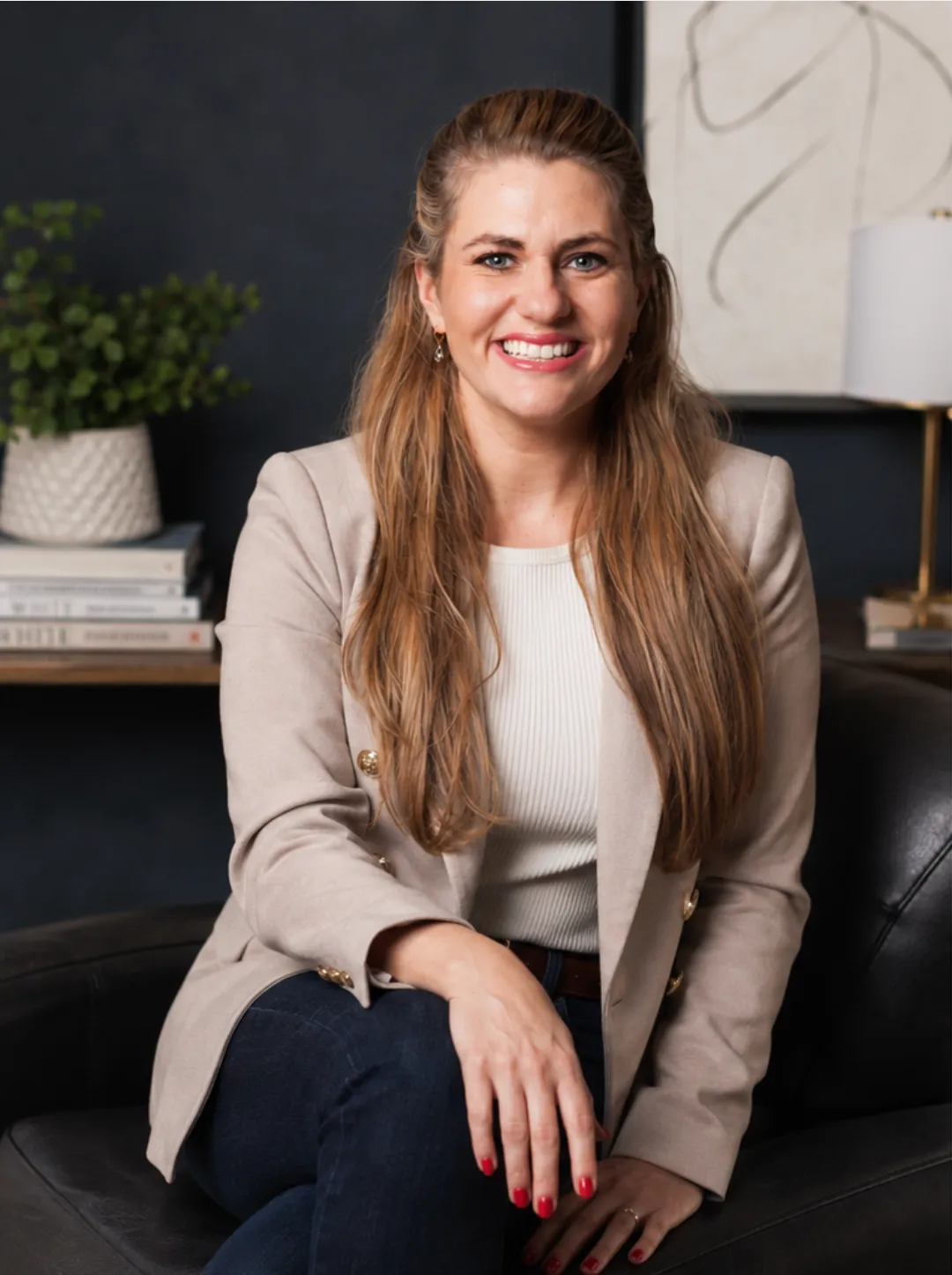
Mandy Hornaday: Hey everyone. Welcome to Growth Activated. I'm your host, Mandy Hornaday, and I'm so excited to have you join me for this episode. Today I'm honored to welcome Leslie Vickrey, an entrepreneur, author, podcast host, and a true champion for women in leadership.
Mandy Hornaday: Leslie is the founder of ClearEdge, a company transforming the business of talent through marketing, recruiting, and leadership development. She's also the co-founder of ARA, an organization dedicated to advancing women in technology, and has built a reputation as one of the most influential voices in her industry. Full disclosure, I've had the pleasure of working as a marketing consultant for ClearEdge for the last year, and I've long admired how Leslie leads as a CEO, builds a high performing agency that truly partners with its clients, and drives meaningful change in the industry. So today we're going to be diving into her journey around how she built ClearEdge, the power of personal branding, and the lessons she's learned about leadership, culture, and marketing along the way. Let's dive in.
Mandy Hornaday: Well, hi, Leslie. Welcome to the Growth Activated podcast. I'm so excited to have you today.
Leslie Vickrey: Hi, Mandy. Thanks for having me. I'm excited to be here.
Mandy Hornaday: You know, we didn't plan this, but funny story, today is actually my one-year anniversary with ClearEdge as a marketing consultant.
Leslie Vickrey: Happy anniversary.
Mandy Hornaday: I know. It was not planned.
Leslie Vickrey: I did see the announcement on Slack. So happy, after a long time talking with each other and meeting and trying to find opportunities to work together, you've been here for a full year now.
Mandy Hornaday: Absolutely. Absolutely. And you know, this has actually been my first year on the agency side. I came up on the in-house side and it's been a wild year learning the agency perspective, and it's been so much fun. But part of why I'm so excited to have you here today is because I hugely admire what you've built and who you are as a leader. And for our audience who isn't aware, ClearEdge has an incredible reputation within the industry that it serves. Everyone knows you and loves you within the industry. I just remember every conference I went to, every interesting white paper that came out, it felt like you had a hand in it, you were either sponsoring it or you were speaking at it, and pair that with the company culture that you've built, one of the best cultures I've ever worked with. So you've built something really special. And I am excited to really dive in today to learn more about how you built it, why you built it, and some of the learnings you're seeing from both the agency and the in-house experience that you have.
Leslie Vickrey: Oh, well, thank you. Thank you so much for all of that. That feels really nice. Thank you.
Mandy Hornaday: Absolutely. So let's start with your background. I'd love to hear, I know you came from the in-house side as well, and then obviously built your own agency. What caused you to do that? What was sort of your journey into the agency space?
Leslie Vickrey: Sometimes I feel like the non-agency agency, because coming from the in-house side, a lot of us miss that and love that and like the idea of helping companies as if we're part of their team, which you've probably picked up on working with us. That's really important to us. So I did not have any agency experience either, coming into starting ClearEdge. And my background, I started, not to go way, way back, but my passion was really journalism and writing. So I wanted to be a journalist or a broadcaster, and through various circumstances that did not happen. And I ended up landing at McDonald's Corporation in internal communications. So for me, I love writing. That's a passion of mine, as it relates to marketing and why I wanted to do journalism and PR, but the opportunity presented itself. So I moved, I went to school in Michigan, grew up in Michigan, moved to Colorado to do broadcasting, that did not work out, moved to Chicago for McDonald's Corporation, and really had to kind of fall in love with writing in a different way, in a marketing sense, and really very niche internal communications. From there, I went into the nonprofit world and really got my experience, I'd say more in marketing. So event planning, fundraising, PR, and still doing a lot of the writing, kind of the jack of all trades, so to speak, where I was doing the design and the writing and the pitching and all of the event prep and so forth. And after that, that's really when I got into the industry that you and I have been a part of for so long, the staffing, talent, tech industry, and really then started getting my experience outside of the internal communications or little pieces of marketing and diving into full-on integrated marketing. I realized quickly that, through mergers and acquisitions actually, so similar story as you, the company I was with at the time, they wanted me to move from Chicago to Atlanta, and that was to continue to rise up in my career there. However, I didn't want to move. So I stayed in Chicago, went to another company, and I went from a publicly traded company, big responsibilities, global experience and so forth, to a much smaller company, not tiny by any stretch. They were about 25 million in revenue, several locations. And again, I was tapping into my abilities to do all these different things, but I was at a stage in my career where that really wasn't what I wanted to do. I wasn't a designer. I loved writing, but I wasn't necessarily, I wanted to manage a team at the time. So I decided to start ClearEdge and offer this option or opportunity for companies to outsource their marketing. So they could have a part-time fractional CMO, they could have basically what they needed when they needed it, and be really agile and flexible in making those investments, instead of carrying the full-time staff, so to speak. So that was really the genesis, seeing a need for those small to mid-sized companies to have the same powerhouse marketing team that the larger companies had, but at a fraction of the cost. So they could have access to that great talent, but maybe not have to pay for it fully. Meaning, they're paying for it, don't get me wrong, but it's more on a retainer basis than carrying the overhead cost of that. So that was the original intent, based on my own experience and what I saw happening.
Mandy Hornaday: Interesting. And so talk to me a little bit about how you actually made the jump. Did you immediately jump to be an agency where you were outsourcing work to other contractors? Or did you start yourself as a consultant and fractional and then build your legacy from there?
Leslie Vickrey: Well, one thing to be really clear on, I had no idea what I was doing, other than I knew there was a need in the market. And I didn't have a business plan.
Leslie Vickrey: I did not have a budget, I didn't have a team or a staff, I didn't have contracts, and I had never been in sales. There was a lot I needed to learn when I did it, Mandy. But one thing that has really helped me throughout my career, and something I talk about a lot, is, and it's a little cliche, but your network is your net worth. So one thing that I did have was a client lined up. One of my past employers, they knew that I was going off on my own, and they had suggested us to be the agency of record when he took on that new role. So one thing I don't talk a lot about is I actually had an agency before ClearEdge with a business partner, and it didn't work out. So then I hit reset and did ClearEdge. And there were a lot of lessons there as well. But again, I didn't have business plans, I didn't have a lot of things, I just knew that I wanted to go into this and give it a shot. And I had mentors and friends who were so supportive and just kept encouraging me to do it. So I was also single at the time. I had a dog and a loft, but I didn't have a lot of responsibilities. So financially, I knew I could give it a shot. I didn't need to get funding or anything like that. And I did have a team pretty quickly. I recruited some people in who you know through ClearEdge. So Jessica Castaneda and Sarah were two of the originals. I remember having to convince Jess to leave a full-time job and go contract, because I couldn't afford to pay her a full-time salary, but I could do contract and build the model that way. And she did it. And I'm so grateful that she did, 18 plus years later. Same thing with Sarah. Sarah was living overseas in Paris, in France, and I happened to call her on a Saturday and had a need for a writer, and she said yes, and it worked out. Again, 18 years later. So I was fortunate in that regard, where I had a client out of the gate, someone who knew me and trusted me as a marketer. I wasn't afraid to ask for help, so I knew I needed help with legal, so contracts, proposals, all of those things. Now, fortunately, in-house, one thing that I did a really good job of was aligning myself closely with sales. So I knew what went into selling, but I never had to sell directly. So that was kind of a learning curve. But what I have found works really well is when you're really passionate about what you do and you're the expert in what you're actually selling. I'm a marketer selling marketing. It didn't feel like selling. It felt like I was just advising them and consulting them, and clients really appreciated that.
Mandy Hornaday: Absolutely. And I'm so curious, because in my mind, you had to learn two drastically different things. You had to, one, learn agency life, and two, you had to step into the CEO role. And so, huge kudos. That's like two mountains to climb in tandem. What were some of the learnings you had that you would advise or share with anyone who is interested in starting their own marketing agency, either on the agency side or the CEO side?
Leslie Vickrey: Well, it's a good point on the CEO front. You know, a lot of marketers, when I was doing this before, today it's different. Marketers get experience and exposure to different parts of the business and can continue to move up into different roles within the C-suite. The chief revenue officer, CEO, there's a lot more opportunity today in that C-suite realm, so to speak, for marketers, which is incredibly exciting. For me, going into that,
Leslie Vickrey: I never really saw myself as a CEO.
Mandy Hornaday: Interesting.
Leslie Vickrey: I had a hard time even saying it. I'm a CEO. The funny thing is, today, when friends launch their own companies and they're wondering, well, what should my title be? How do you introduce yourself? I'm like, you're the CEO. It's your company. You're running it. I don't know if it's imposter syndrome or what it is, but it's something where you just don't necessarily see yourself in that light. You know, my journey, Mandy, everyone's journey is different. So one is to make it your own. And I do coach and consult with a lot of entrepreneurs and share my thoughts on it, and people just have different opinions. You could be in a full-time job and have this idea, and you can ruminate on this idea for a really, really long time and never really do it. Or you could go for it and really bet on you, bet on yourself, know that you can ask for help. You don't have to know everything. And asking for help is really critical. I'm 18 years in and I still have advisors and coaches and mentors who I lean on in different elements and aspects of the business all the time. I'm really not afraid to ask for help. And I think that's a key thing. And don't feel like you have to necessarily wait. Now, I'll say that everyone's financial situation is different, and the position they're in and their personal lives and responsibilities. Again, when I did it, it was different. I could heavily leverage contractors. I worked out of my loft. I didn't have overhead. I didn't have a lot of responsibilities. And I had a client lined up right away, so cash was coming in. And I did deliver, to your point. I was delivering while I was a CEO. So I was project managing, I was writing, I was doing the work alongside our contractors and eventually our team, to help build the business. But that's a key thing too, to know when to start, that pivotal moment when you go from, okay, I'm delivering client work and they're expecting me to, I need to stop delivering client work and focus on sales and growing the business and have other people deliver it. So you go from being wildly profitable, because you're delivering and selling and doing all the things, to, okay, I need to cut into that profit to really invest in the business to grow. And that's a key turning point, I think, for a lot of entrepreneurs, to decide, do they want that or do they not want that? And it's okay to not want that, for sure.
Mandy Hornaday: Totally, yeah. I'm at a similar point now where, certainly along my consulting journey, I've been a fractional consultant now, as you know well, for the last year. And as I think about what's next for my career, it's been interesting to figure out the right balance between, I've got to pay my bills, I've got to stay committed to work and be the one doing the output, but I also am really excited about this business over here that I really want to invest in. And you know, we were talking earlier about, like, just jump in and do it. I have wanted to start a podcast for years. I have wanted to mentor and coach other people for years. And it felt like I always needed to learn more, or, I guess imposter syndrome is probably one of those things. And something that I learned recently that really has stuck with me is this idea of just-in-time information. And so you don't need to understand everything at once, to your point of just learn what you need right now, in this moment, and then you'll learn everything else as you go. And that's been really humbling for me as sort of the type A.
Leslie Vickrey: You and I both spent years making CEOs look great. That's part of a marketer's job. You're behind the scenes helping everyone else, helping the company's brand, building the culture, working closely with HR and the C-suite. You're getting the CEO, president, all the executives, speaking opportunities, PR opportunities. So our voice, it's not that we muted it, but it's everyone else that we're putting out there. And then all of a sudden you realize, like, wait a minute, I'm that voice. I have an opinion. I'm a thought leader. I can go out there and do these things too. And it's a really interesting experience, I think, for marketers in particular, because we're so used to promoting everyone else. We don't always promote ourselves. And then it comes time to say, I can actually set up the podcast and do this. I did it for years for other people. I certainly can do it too. So it's just a matter of thinking of it differently for yourself.
Mandy Hornaday: It's such a great point. And I've never really thought about it like that. And I know you talked about earlier, like, your network is your net worth. I know you invest a lot in your personal brand, and I see it, I feel it, I see the impacts of it in the industry.
Mandy Hornaday: Did that come naturally to you? What tips and advice would you have? I guess, what's been the downstream impact as well, to your business and to growth?
Leslie Vickrey: It's a great question. I would say the networking piece, when I had to look back on that and think about the importance of it and where that stemmed, that did start really early for me in my career. I didn't realize at the time how important it was and where it would take my career, and help me, by asking people for help and then realizing I got here because of them, and then they helped me get there, and then this helped me get here. And while you're doing that, you're building your personal brand, because those people know you. I mean, for one thing, to have a good personal brand, you've got to be really good at what you do. People need to trust you. They need to believe in you, see you as a thought leader. So anytime little pivots like that happened for me, it always came with a little bit more of building my brand, which was really helpful. So building my network helped me create that brand, because then people refer you to other people and say, I've heard so much about you from so and so, I want to meet you and get to know you. Well, that's your brand as well. It's everything you do, not only externally to the world, but internally, how you are working, how you interact with people, because that extension of your network, they're building your brand on your behalf too, whether you realize it or not, it's happening. So you want to do really good work and be seen as that thought leader. For me, a couple of pivotal things I think really helped. One, when I started the company, we immediately partnered with TechServe Alliance, which is an association for IT and engineering staffing companies. And we did that, ironically, I was a member of the association when I was in-house, so I already knew them and had this affinity and affiliation with them anyway. Then we started doing marketing for the association, and they've been a client all 18 years. Really good friends and partners, and definitely, by targeting an association where your prospects are, that has helped a lot too. But we sponsored their women's luncheon and hosted it for many, many years, I'd say over 16 years now. And in that luncheon, it was a women's luncheon, I think the first that the industry really had, and the first time that we put emphasis on supporting each other as women in this format. In doing that, I didn't realize it at the time, but I was also building my brand and equity, because I was always up on stage speaking. So I'm speaking, we're creating content after that, we're posting that content, I'm talking to the other speakers, creating the program, building the program, all of those things that you do, it builds your brand. And then people continue to see you as a thought leader. And in that case, people had seen me through marriage, divorce, pregnancy, baby. I brought Greyson into one of the lunches. Like, you don't realize that when you put yourself out there and you're really vulnerable and you're putting it all out. I cried at the luncheons. I mean, I was a mess at some of those, because of things I was going through, but they loved it. They appreciated it. They embraced me. They helped me. I helped them. And it really was this kind of starting point, I think, of helping me do that as a thought leader, because not only with the luncheon, but I would contribute to webinars, I would talk about marketing, I'd sit on marketing panels. So then we started to become known as the industry expert in marketing in general, as the go-to firm for that, which ultimately was our vision, to become that. And then from there, we partnered with other associations, got more speaking opportunities, and really just kept asking for opportunities. If you need a speaker, lean on me, being really active and proactive again in building that network, helping others build theirs, but be visible, be vulnerable, and put yourself out there a little bit to build that brand. So it took time. It's 18 years in the making. Certainly coming out of a large company like I did, a lot of those executives scattered to other companies, so being able to have that network and have them spread the good word about you is also really critical to building your personal brand.
Mandy Hornaday: That's great. And by the way, I have heard about the luncheon that you brought Greyson into, from other clients, and it brought them to tears to even talk about it and how moving it was. And so clearly your vulnerability has really resonated with people. And so, Leslie, well, it seems like everyone's building their personal brand today. I mean, honestly, LinkedIn is a bit overwhelming for me right now. I don't know if it is for you, but it feels so saturated with everyone sharing their thoughts, and you can just tell, we're all building a voice, which is amazing on one hand, but it can feel very intimidating on the other, for those who are just getting into this. And so what advice would you have for people that want to build their personal brand? They understand the importance of it. Where would you have them start?
Leslie Vickrey: Yeah, it's a great question. And I have to say, for us, just using ClearEdge as an example, you're on the inside of ClearEdge. You know the inner workings and what it's like. We have, you were just featured on a Spark the Space video where we're showcasing experts. And one of my goals is, this isn't the Leslie show at ClearEdge. You know, I help sell. I am not involved in delivery really at all. I'll get involved in strategic conversations. I'll brainstorm behind the scenes. I'll participate in building those executive-level relationships. But you all are the real talent. Yes, I used to do it, but that was back in the day. And I still love doing it and advising and writing and all of those things, but I'm not delivering. So to have our team out there really showcasing themselves from a personal branding standpoint is important to me, because it showcases a depth of talent that we have, and how that helps differentiate us as well. And to get started, it is things like, what is the company doing that we can participate in, to dip our toes and put things out there? And I think the other thing is to realize it's not for everyone. So, like anything, know your why. Why is it important to you? Why do you want to do it? Is it because you love writing and you love reading these things and you want to put your thought leadership and knowledge to work and build your network and so forth? Is it you're trying to help the company brand get out there and build your brand at the same time? Do you want more speaking opportunities? Do you have visions of something as you continue to grow your career, and you want to use it to do that? Understanding your why, and the audience, and the mediums, is really important. And give yourself grace. Don't worry so much about, gosh, that post didn't perform very well. A lot of mine don't perform well. The ones that perform well for me are the ones where I'm the most transparent and putting something personal out there. Those always get so much interaction. But what I'll tell you is, the others that we put out, that could be about marketing or business or something like that, people are reading them. They may not engage with them, but they're reading them. People mention them to me all the time. We see you everywhere. I noticed you're speaking here. I was on a call the other day and they quoted the stats that we posted announcing our second-year anniversary for recruiting, and Lesly Cardec's incredible stats in that division, and they didn't engage with the post, but they're reading it. So you're putting yourself out there, and you need to be patient with it. But I'd ask yourself why you want to do it. And then just baby step it. Think about the best medium for what you're trying to do. If you're at a company and they support it like we do, we put out a ton of content. Use our content, volunteer when we ask for Spark the Space videos to showcase our experts, or we're wanting to do webinars or have you on a podcast, say yes. Say yes to speaking opportunities. Say yes to podcasts, and then use that content to your benefit when building that.
Mandy Hornaday: Yeah, absolutely. I love the reminder. It's such a simple reminder, but such an important reminder, to think about why you're doing it. Because I've always had the desire to build my personal brand and have a strong voice in the marketing space, but it really wasn't until this year, probably in the last six months or so, where it sort of clicked for me. Like, I don't want to have a marketing voice with CEOs or with COOs, I want to have a marketing voice with other marketing leaders who need a CMO to look up to. Because that was something I didn't have coming up. I never had a CMO that I worked with. I had to learn and sort of scrap everything together, which was a great experience. But I really identified this year, I want to be the CMO mentor to others that I never had. And so I love the “know your why,” because it really shapes the things I get involved with, the topics that I talk about, and the drive behind why I'm doing it.
Leslie Vickrey: Yeah, the guests you're having the conversations with, the questions you're asking, it's all to help fuel that piece.
Mandy Hornaday: Yeah. And just while it's top of mind, because marketing ROI is such a hot topic. And to your point, a lot of the things that are happening, and the people that are seeing it, it's sticking with them, they're not actually engaging with the points. And so it's hard to note that that visibility is happening, that the engagement and credibility is happening. I'm so curious, from the CEO perspective, as you're talking to your peers who really want to drill down on measurable success from marketing, how do you educate them and talk about the importance of doing these types of activities?
Leslie Vickrey: Yeah, Mandy, it's such a great question. And I know we talk about it quite often, the ROI of marketing. And so many people think of marketing in different ways than I think you and I do. We see it as business growth drivers, period. It is going to drive your business forward if you invest in marketing. Keyword I just used, invest. And that means investing in sales and marketing alignment. Does the company, I asked this question today on a call with someone, I said, does the company believe in marketing? What do you have to overcome to get marketing to work? If you think marketing is one email campaign and it never works, we've tried that one email campaign, or we're active on social media and we're not seeing any results from it. When you stick to one channel and one thing, or maybe you're trying a couple of things, but you're targeting the wrong audience. If you don't take the time to ask the why, do we believe in it? Why do we need it? What do we want it to do? And really take the time to lead with the business goals and tie that into the strategy. I've seen way too many marketing organizations be so reactive, because they're reacting to every single request they get in. Oh, we have this proposal, we need help with this RFP. I need this sell sheet. My sales team is telling me they can't sell without more messaging and more content. There's always an excuse for marketing to jump in and be reactive. And a lot of us are type A. So we're checking those boxes and saying, I delivered that presentation to the sales team, okay, I did that sell sheet, this is great, I helped that CEO with their speech, okay, I'm good. Well, yeah, you're probably good at what you do, but does it show results? So making sure you can tie it into actual results, which is hard if you don't have sales and marketing alignment, the right tools and technologies, or a vision as a company and goals as a company. If you don't have business goals as a company, which a lot don't, actually.
Mandy Hornaday: I know.
Leslie Vickrey: Well, how do you align marketing to it, and how can you do it? So unfortunately, I think bad marketing programs get blamed a lot for marketing not working, when marketing really can work when it's done the right way. But you have to be willing to think differently and invest in making it work. And listen, I'm a CEO, you said it, I own my own company. We invest in marketing too, and I ask the team a lot of questions. You know, that's great that our click rates are above average, let's talk it through. What else are we doing with that content? What other channels, what other mediums? How are we tracking it back to ROI? And if we can't, why? What's broken in our systems that we can't get the data or analytics? Because I want to know. And quite frankly, the reason I want to know is, if it is working, I want to invest more in it.
Mandy Hornaday: Yep. And I always ask clients that, like, if you could track that marketing was driving revenue, wouldn't you invest more? And the answer is always yes. So why not get it in that right shape and position to be able to do that? I completely agree with you, Leslie. Actually, just on last week's episode, I was talking to five-time CMO Scott Todaro, and he had done a lot of research with CFOs and had said, hey, if marketing could prove a 3X return on marketing, would you invest more? All of them said, if you could prove a 3X return, your budget would be unlimited. I mean, the C-suite is open to investing.
Leslie Vickrey: Well, they have to have the faith too, to make the investments to get it there.
Mandy Hornaday: Absolutely.
Leslie Vickrey: If they don't have the tools and technology, the right sales alignment and accountability, it's just not going to work. So are they willing to put that investment in to make it work? That's really important.
Mandy Hornaday: Absolutely. And sort of along those lines, but I'm going to pivot the conversation here, because, with all of your agency experience, I come from the in-house side, but I'd love to hear your perspective on where you think an agency plugs in really well. There's sort of the build versus buy dilemma as people are looking to increase their investments in marketing. How do you typically educate CMOs or CEOs on where they'll get the most value from an agency, versus what roles or functions are really important to build in-house, to ensure that they're getting the most from marketing?
Leslie Vickrey: It's a great question. And one thing I will say is, I do think it's different for each company, depending on the stage of where they are and, quite frankly, their culture. There are some companies who just don't do well outsourcing functions of their business. So if they're not outsourcing anything, and then they go to outsource marketing, there may be a reason why they haven't been, and that could be culturally driven. So in that case, they may need most of the team in-house, but there are probably certain functions that aren't full-time that they can outsource. And usually that could be, again, depending on the company and the industry, it could be PR, it could be analyst relations, it could be specific demand gen campaigns, it could be branding and messaging. There are different functions that you may not need full-time, depending on the company. If you're an e-commerce company and marketing is driving everything, you're going to need a mix, a nice internal team and some experts externally, that again, maybe you don't need full-time paid ads or SEO in-house. My gosh, if you're e-commerce, it's so critical to your growth. It just may not be full-time, but you need a great agency who specializes in that to help you get there. So we're a strategy-first company. We tend to look at, what are your business goals? How is marketing going to help drive it? And then, what should that team look like? So taking the time to actually evaluate or reevaluate that. Maybe you have a marketing team in place right now, but you're evaluating where things stand based on where the company is today and where you're looking to go in three to five years. So doing an audit and assessment, just to make sure everything is on track, working hand in hand with the marketing team, can be really helpful. Oftentimes those marketing teams know in their hearts that maybe it's not a full-time job, or maybe they need someone with expertise in this, that, or the other, and they'd actually see better results. But then, if they say that, are they losing their job? So they may not want to come forward and say that necessarily. So sometimes doing that audit and assessment can help. It can also create and present opportunities to bring in people like you, to mentor the team, to rise them up if they're not ready, or to offer more professional development. Maybe someone has a skill in one part of digital, and what the company really needs is another part, but that person is the right person, wrong role. Could they get the development and training to get there? And then leaning on an agency to help with that can make a difference too. So I think it really just depends. Fractional CMO, you've been in a fractional CMO role. I've always felt pretty strongly that, depending on the company, once you get that strategy set and going, can you have that be a fractional position, where they can still be a member of the executive team, they can still report up to the board level, they can still manage your team? You can actually get incredible talent that maybe you couldn't afford full-time, but you can have access to, and your team can have access to. And it doesn't mean it has to be long-term. It could be a year, three years, to get that team where you want them to be because you believe in them and you want them to grow. It really is dependent, I think, on the situation. And for us, that's why we have the model we have. We're a full-service marketing agency. In some cases, people outsource completely. In some cases, they're leaning on us to recruit their team. In some cases, we're special projects and special forces. We're their PR agency. We're their digital agency. Coming in and doing branding and website build. It really depends on where they are, and meeting them at their need.
Mandy Hornaday: Yeah, absolutely. And I think, in my past, from an in-house perspective, the two areas where I really saw a lot of success with agencies were the strategy, if there was a strategic gap on our team where we had a great senior manager at something, but they were missing the director or executive director level strategy for that program or that area, it was always incredibly helpful to get an agency's perspective. And then highly specialized functions like SEO. You may not have the budget to have a full-time, highly specialized, well-paid SEO person on your team, or an SEO team, but you want that level of expertise. And I think what's unique about ClearEdge is that, even though you are wide in terms of what you offer, you are narrow in the industries you serve. And so that absolutely still gives you that level of specialization. And I know is a big reason why clients choose ClearEdge.
Leslie Vickrey: Yes, for sure. That's a big part.
Mandy Hornaday: One of the things I was thinking about is, for people who are considering using an agency, or marketing leaders who want to bring an agency in, in my experience, I was laughing at myself this morning as I was thinking, I was almost equating it to how you prompt ChatGPT. Like, you get out what you put into it, from the in-house side. And I see that all the time, the more that a company welcomes you into their team, into their company goals, the more context they provide, the better output they'll get from an agency. But I'd love to hear your perspective. If marketing leaders or C-suite executives have decided, we know we need an agency, or maybe we're not getting what we need out of the agencies we use, and we just generally don't believe in them, what are some of those critical pieces of success that you've seen that really determine whether someone's going to get the most value or not?
Leslie Vickrey: Yeah, it's interesting, Mandy, because sometimes, because of the level of talent, so imagine, I'm a CMO and you're brought in by my CEO. Am I intimidated by you? You're coming in to do the strategy, and in my head I'm thinking, but shouldn't I be doing that strategy? Why am I not doing it? They must see something that I'm missing. So out of the gate, sometimes there can be that sense of friction of, they want, they're going to come take my job. They're going to come in, they're going to identify things that are missing and lacking, and that's it, now I'm done. I've been seen. I'm a fraud. It's that imposter syndrome, lack of confidence, that can sometimes get in the way. And the best thing I can do is say, partner is the key term. See it as a partner, not a threat. And treat it as a partner, as if it's an extension of your team. And that is so important. Be transparent, and communication. So let's say we were hired and someone wasn't happy with a first round of writing. What I would say is, it's the first round, and we just started working together. We've got to get to know your voice and make sure that we're hearing you clearly and understand it. And we need that feedback. And it may take two or three rounds. Instead of not saying anything, and then months go by, and then all of a sudden we're fired. And it's like, for what? There was no transparency and no communication. And that goes both ways. If we're working with a client and they're impossible to get a hold of, they're not fully invested, they just don't see the value, we're not going to be successful. So the key thing is, we have a list of partner values. Like, what will make this successful? Treat us like humans. We are partners. If you say something like, well, you should be telling me that, okay, well, it's your business. We want to get to know your business inside and out. So tell us about your sales process. Tell us about your cost of sales. Tell us everything, we want to learn your business. Let us in, be transparent, be open, be honest with communication. It's like any relationship, treat each other fairly. And that transparency and communication, those three things, partner, transparency, communication, are so, so critical.
Mandy Hornaday: Yeah. Absolutely. One of the things I've gotten accustomed to telling clients is, when I ask them what their view of marketing is, or should be, and their immediate reaction is, well, you should be telling me. And I always say, well, I want to hear your perspective. I will absolutely tell you what my perspective is, but your perspective is incredibly important. This is your business right now. And so, yeah, I could absolutely see that. Well, Leslie, I definitely would be remiss not to talk to you about culture and leadership, given just the amazing culture you have, but also everything you do to lift women leaders up in the communities that you serve. And so I'd love to hear your perspective on when you built the culture, I'm sure you did it very intentionally at ClearEdge.
Leslie Vickrey: Yeah, you know, I at the time didn't realize how intentional our culture building was when we did it. But from the beginning,
Leslie Vickrey: everyone had a why as to why they wanted to work at ClearEdge. At the time, one of the reasons was flexibility. So we had a remote model when no one had remote models, going back over 18 years ago. And what I realized was, I was giving people opportunities that I didn't realize how valuable they were to them. So it could be something like, someone had a parent on our team who had late-stage Alzheimer's and they lived in Florida and needed help, but her corporate job was in Boston. So she had come to me and said, I love your company, we had worked with her as a client over the years, she said, I really want to be with my dad and help my mom out in Florida, but my company won't let me. And I just kept saying yes to these, like, well, of course, yes, we would love to have you. And so she worked part-time in Florida and part-time on the Cape, and it was one of the most loyal employees we've ever had. And it was story after story after story of, a special needs child, and the company wouldn't give them flexibility to go to appointments or do different things. And in my mind, I kept thinking, who are these companies not giving you, of course, like, that was a given within who we were and what we did. And that led to really building this company and culture of inspiring loyalty with your team and being there. You've seen it. We've had, sadly, in the past year, a couple of people with breast cancer, doing very well, thankfully. But the team steps up and steps in for each other in ways that, what I hear from other people, it's been a long time since I was at a company, but it's unique and different, and they're always willing to take care of each other, because we know there's a time when we're going to need help with something, and just to be there. So we had come up with the culture of Rise Up, and it's always to rise up others on the team, if it's launching a podcast, launching a company, rising up in their career within the company, whatever that may be, it's having the opportunity to present them with an opportunity to continue to rise up. And that is through and through our culture. We talk about it in our all-hands meetings. We have values that we stick to with everything we do, when we decide which companies to work with, who to hire. It's all really important. So over the years, I don't interview anymore, but when I was, I would ask the questions about their why, and I would dig to make sure there was a why, that there was something unique they had going on personally and professionally that we could help them with, to help rise them up, and that that why was met. And that led to a really strong foundation and culture within the company. Then you've got to look at your teams and think about how you interact and how that threads throughout the company and the teams you're building and growing. For me, I always lead with trust and transparency. I trust you, and I hope you trust me. And I'm going to build that trust by being extraordinarily transparent. And some people have coached me that it may be a little bit to a fault. And I'll say, well, maybe for you and the way that you lead, but this is the way I lead, and I don't know any other way. And I believe in it, and I know the team believes in it, and they appreciate that. And that's what's led to having such a strong culture. But what our culture is isn't going to be right for someone else, and I'm okay with that. I want it to be right for us and the people who are on our team. And people have left because it's not the right culture for them, and I'm okay with that. That means we need to do a better job when we're hiring and interviewing, and make sure we're bringing on the right people. But you don't always get it right. And what you want to make sure doesn't happen, and this can happen really quickly on small teams, is one person can throw that culture off and be toxic and create an environment that you don't want to have. I've grown a lot as a leader over the years. I have an issue with conflict. This is a childhood thing that I'm working on. And I was more of a ruinous empathy leader, where I'm a fixer, a pleaser, want everyone to be happy. And now, more radical candor, can be direct, but everyone always knows it's coming from my heart. Because, again, that's the only way I know how to lead. And that's the only way I know how to be as a person. And then that goes back to reflecting on your personal brand and why people want to be around you, or why they want to work with you, or why they want you to speak. I don't know that leaders always realize that as they're leading their company and choosing the tone and the culture that they set, it does extend externally. Clients know it, they understand what that's like, because they're working with your team. And then that filters out into building your own brand too.
Mandy Hornaday: Yeah, absolutely. And I mean, I can say that I've never worked for a company before where I knew what the core values were. I mean, something as simple as that. Gosh, some of the companies I've worked for didn't even have core values, right? I mean, naturally they come to life just in how people show up with each other and with their customers and stuff. But you can definitely tell it's very intentional, and it's woven into the investments that you make, the team members you bring on, how you serve your clients. It's really impressive.
Leslie Vickrey: I will say, when you're a marketer and you specialize in internal communications, that you have a team filled with internal communicators. Jess Elliott, who's our COO, I don't know if you knew this, but she was my internal communications partner at the company early on.
Mandy Hornaday: I didn't.
Leslie Vickrey: No, she would help write the internal communications that our division had to send out. So you have a company who worked really closely with HR on values, and the C-suite on values, and the importance of communication. We always say, and I'm sure you see it when I show people our Slack channel, oh yeah, you can give kudos through Awesome Alerts, you've got Five for Friday, you have these awards, they're all tied to our values. I do think part of that is because we're marketers and communicators by nature, that we then lead with that. And I do think it helps strengthen the culture and the way that we communicate with the team and our clients and so forth.
Mandy Hornaday: Absolutely. That was one of the things, a few of the companies I've worked at didn't have core values at the company level, but we created our own at the marketing level, in terms of how we wanted to show up and serve the organization and serve our customers. And I guess that leads me into an interesting final question. Obviously there's a lot happening in the world right now with the new administration and changes with DEI and stuff. And we don't have to get into that one way or the other, but I am curious, from the marketing perspective, how would you be encouraging marketing leaders to be partnering with their C-suite as their companies are figuring out which way to go on some of these new changes that are coming out?
Leslie Vickrey: Well, one, I hope the C-suite leans on marketing for things like that, because sometimes they don't think about marketing being in a function to help with internal communications. And internal communications is often really overlooked. So I have a couple of thoughts on that. One, I mentioned, ask for help. I am not an expert in all things internal communications as it relates to DEIB. I'm not. But I talk on the topic a lot, because I'm passionate about rising up women in the workforce, and I'm passionate about equality for all. So for me, I ask for help. I lean on resources to help me. Rocky, who runs a diversity consultancy, puts out a newsletter I subscribe to. She has a text, phone call, meeting, a way to get advice, help, and counsel on how to handle it. She's put out a lot of resources on this topic as well. Deliber, another advisor I lean on all the time, in fact, she had been engaged by our company to help us as well. We have regularly scheduled meetings, but she's also helped us and our team when certain things have happened where we need advice for our own company on how to handle it. If I'm coming onto a town hall to talk about something significant happening, I'm not going to let fear get in the way of me doing it. I am going to do it, but I am going to be prepared. And part of that prep is, I meet with Lesly, I'll meet with Jess, Sarah, other people on our team, I'll meet with industry resources and experts. I take the time to make sure I'm really thoughtful in my approach. And at the end of the day, what's most important, I think, to me and the team and our clients, is that we stick to our values. We lead by our values. I don't go out making big political statements. I've published articles on this. I don't think work is really a great place for politics. I do think it's a place for everyone to feel like they can belong and that they're in a safe space. And I feel very strongly that by saying nothing, you're saying something. And by saying nothing, and people on your team are impacted and affected by it, what is that saying to them? Do they have the support of the CEO or not? So next week is our all-hands. And I'm going to address the topic and talk about it within the company meeting. And the core thing is, I will not divert from our core values, which is equality for all, for us. We really believe in supporting and helping everyone and creating a safe space for that.
Mandy Hornaday: That's great. I love the authenticity. It's been heartbreaking to watch some of the companies that you felt were authentic around their initiatives, and now are peeling back a lot of the stuff that they've worked so hard to put out there. And so I just love the authenticity. Either way a company goes, just be authentic to who you are.
Leslie Vickrey: And what you say externally, you know, sometimes companies say things externally, but the story internally is different. And for us, like, that trust and transparency, I don't go out and make, and we're not a consumer-based company, we're B2B, but I know a lot of people have different beliefs, and they're different than mine, even within the company. So I am careful about that and want to respect everyone's beliefs and values. But there's a saying called diversity theater, where companies externally will say one thing, and then internally it's totally different from what they're saying. So be careful about that as companies.
Leslie Vickrey: That's why I think the key thing is, and you mentioned some companies don't even have their values, but if you can be rooted in a foundation of what your values are, that's a really great place to start, and know what that belief is. And then it gives employees the option to choose. Does the company's values match mine?
Mandy Hornaday: Yeah.
Leslie Vickrey: And if not, then you have a choice to make. Is this the company I want to be at or not?
Mandy Hornaday: Absolutely. Absolutely.
Mandy Hornaday: Well, Leslie, thank you so much for taking the time to be here today. For those that are interested in connecting with you, learning more, following your podcast, how can they find you?
Leslie Vickrey: The best way is LinkedIn. I'm pretty active on LinkedIn, so just Leslie Vickrey, V-I-C-K-R-E-Y, on LinkedIn. And yes, I'm always happy to connect and share more. I'll do a quick plug. We had our first book, Together We Rise, come out with the Lady Leaders. We're working on our second book, so that should be out by, I'd say, mid-year, end of year. So keep an eye out for that, which will be another great way to learn more about our stories. And it's really along the lines of an angle of courage. So each chapter is talking about the courage to do something. So I'm really excited to continue to share my story in that way.
Mandy Hornaday: Oh, I'm excited to read it. Well, thank you so much, Leslie, for taking the time to be here today. This was wonderful.
Leslie Vickrey: Thank you, Mandy, for having me, and congratulations on launching your podcast.
Mandy Hornaday: Thank you. All right, friends. I hope you enjoyed today's conversation with Leslie. I know I personally took away so many valuable insights around leadership, personal branding, and building a thriving agency. And I hope you did too. As always, thank you for tuning into Growth Activated. If you enjoyed today's episode, would you please consider subscribing and leaving a review? And in the meantime, keep activating growth for yourself and your company. See you next time.