Mandy Hornaday: Most CMOs are asking: how do I use AI to make my team more efficient? But today's conversation asks a bigger question: how is AI changing our customers, our markets, and our role as marketing leaders?
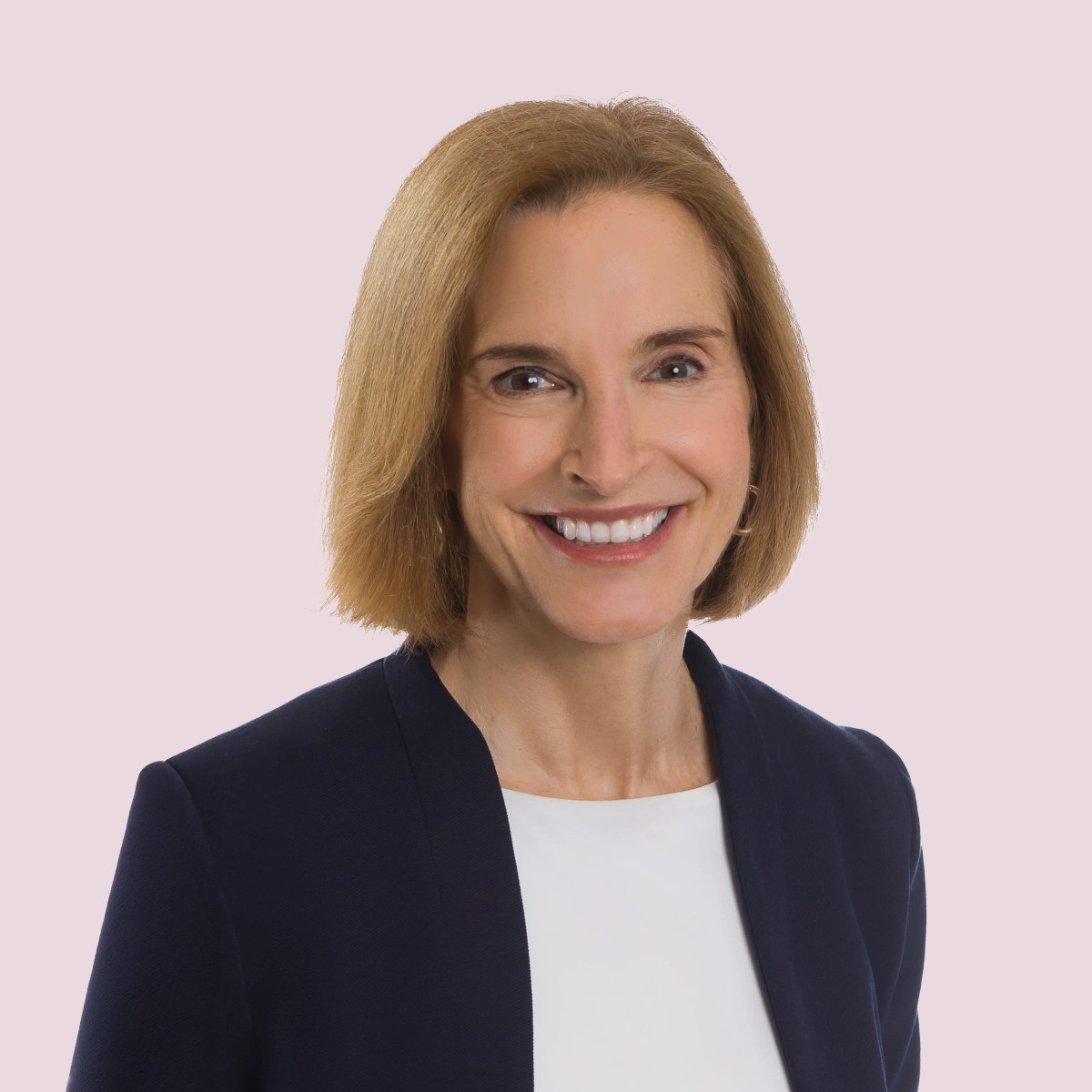
Mandy Hornaday: Hey everyone, welcome back to Growth Activated. I'm your host, Mandy Hornaday, and today I'm joined by Carol Meyers, a former chief marketing officer and VP of Sales who spent her career scaling venture-backed tech companies from early growth through public company stage. Today, Carol is an operating partner and advisor at Glasswing Ventures, where she works closely with boards, CEOs, and CMOs on go-to-market strategy, growth, and navigating major market shifts, including the real impact of AI on buyers and businesses. In this episode, we go beyond AI as a productivity tool and dig into what CMOs should be owning at the executive level: why the strongest CMOs are shifting from internal AI efficiency to external market leadership, how AI is changing the buyer journey and what that means for demand, brand, and sales alignment, the risk mid-market companies face if they underestimate technological shifts, and what to experiment with now, from custom LLMs to content factories and go-to-market agents. If you're a CMO or marketing leader thinking about how to stay relevant, influential, and indispensable as AI reshapes your industry, this conversation is for you. Let's get into it.
Mandy Hornaday: Hey Carol, welcome to Growth Activated. We're so excited to have you here today.
Carol Meyers: Thanks, Mandy. Glad to be here. Great to see you.
Mandy Hornaday: I have been really looking forward to this conversation. I think it's going to be incredibly valuable to our audience. Before we dive in, I'd love if you could kick off with a little bit of your background, your areas of expertise, and what you're doing today.
Carol Meyers: Happy to. I have the classic tech background. I've spent my entire career working for venture-backed software, and sometimes hardware, companies, primarily in go-to-market. The little secret is I started my career in finance as an auditor, so I do have a deep love of numbers. But I made the shift into sales and then marketing. I was a VP of Sales at a technology company and then switched to marketing. I've had the good fortune of taking four companies public, growing them when they were small, maybe Series B or Series C size, up through hundreds of millions of dollars in revenue and a successful IPO. A few years ago I decided to step away from the CMO role and join venture capital. I've been an operating partner at Glasswing for five years, and I now advise Glasswing as well as several other firms. I spend my time working as a board member, advisor, and consultant with the same kinds of companies I had the pleasure to work in, venture-backed and PE-backed tech companies.
Mandy Hornaday: Amazing. I have to ask, what inspired you to go from sales to marketing?
Carol Meyers: Getting into sales was sort of an accident. It wasn't something I had planned, but somehow I went down that path, took on roles people asked me to do, and one day I woke up and I was the VP of Sales with a team of about a hundred people. We took that company public and sold it. Afterward, I took a summer off and really thought about what I wanted to do next. I realized I loved my teams and loved being part of driving revenue, but I didn't fancy myself an amazing salesperson. What I really loved was the go-to-market strategy side. So I thought: I'll move to marketing, where I might be able to focus on that.
Mandy Hornaday: Awesome. And today, advising so many different companies, do you predominantly advise on the marketing side, or across the entire revenue function?
Carol Meyers: A little bit of both. I'm leaned on more heavily on the marketing side because the sales career is a bit in the rearview mirror. But some things from that experience are eternally true. I do find myself veering into sales territory sometimes, helping people think about pipeline management and forecasting, and how to go upmarket, which is something I've had to do a lot of.
Mandy Hornaday: Personally, I spent my first 10 or 12 years in marketing and then went to a very small startup and ran the go-to-market team, overseeing sales. It was a great experience. I didn't love it the same way you didn't love it, but it gave me so much empathy for the sales side. When marketing is asking things of sales, understanding what that actually looks like from their perspective was invaluable.
Carol Meyers: I'm sure it made you a really valuable CMO. In sales, it's very cut and dried whether you make your numbers or not. It was a bit rough in the initial stages thinking about how to quantify things on the marketing side and how to best manage the team. But eventually I got the hang of it.
Mandy Hornaday: So Carol, I know we're here to talk about AI and how CMOs should be thinking about it. But I'd be curious first, you're advising a lot of CMOs right now. Is AI dominating those conversations, or is it just a piece of what you're covering?
Carol Meyers: It's a bit of both. AI isn't dominating the conversations because there are still a lot of basics in sales and marketing that you've got to get right. AI in the world of sales and marketing is more of an accelerator. It lets you do things you always wanted to do but couldn't. I was the CMO of a marketing automation company back in what they call the aughts. We sold primarily to B2C companies, large banks, specialty retailers. Everyone had a dream of being much more personalized, and we made great strides, but nothing like what you can do today. AI gives you capabilities we've never had before. It also gives you the opportunity to do the other thing marketing is always asked to do: do more with less. Sometimes when people are complaining about their budget, I push on what they're doing to get rid of busy work and give themselves more time to focus on higher-impact marketing.
Carol Meyers: The other thing I spend a lot of time on as a board member is the strategic level, how AI is impacting the business. Many of the companies I work with are not native AI companies. They were founded before GenAI came on the scene. They all had some form of analytics and maybe machine learning. But at a strategic level, we really have to be thinking: how is this impacting us? Are we prepared? What are we doing about it?
Mandy Hornaday: And that was one of the things that really caught my attention when we originally talked over coffee. Prior to our conversation, I was probably guilty of being one of the CMOs who was really inward-thinking, how are we leveraging AI to make our team stronger, reduce busy work, accelerate. Our conversation opened up this idea of thinking about AI's impact externally. So talk to us: what are you seeing with CMOs right now, and what should they be thinking about?
Carol Meyers: The CMOs who are really thriving, and in some cases getting elevated to Chief Business Officer, Chief Customer Officer, or even CRO, which we don't always see, are the ones who are avoiding the trap of only asking: how am I using AI myself? They're doing that, of course, but they're also saying: wait a second. I spend a lot of time thinking about our customer, our competition, our market, what's going on in the industry. I'm constantly looking at those things. This is a great time to pull yourself up and look across all of that and start asking: how is AI impacting our customer? What are they going to be doing differently?
Carol Meyers: There are businesses I work with where AI is making the user of the software a little nervous because it's giving other people in the organization the ability to do some of that person's work. And so that user is asking: what does that mean for my role? Well, that's a great question. And then: what does that mean for us as a company and how we serve that person? Marketing can demonstrate their knowledge here. They don't have to have all the answers, but getting that conversation going ensures the company doesn't get blindsided by AI and lose its footing in the market.
Carol Meyers: I've seen companies grow to be quite successful, worth billions of dollars in market cap, and then end up in really big trouble because of technological shifts. The marketing leader has an opportunity to make sure that doesn't happen to their company, by bringing context about what's happening in the market with customers and the industry, and helping the organization figure out what it needs to do to respond, get ahead of it, and lead.
Mandy Hornaday: I imagine there were four areas you were highlighting, customer, competition, market, and industry? What were the key things you were asking us to question ourselves on?
Carol Meyers: Yes. There's the customer, how is AI impacting them? It works two ways: how does it impact their job, and how does it impact how they're going to buy from you? AI is going to change the buyer journey significantly. Especially in B2C, we're headed toward bot-to-bot buying, shopping bots that help people buy. That's something sales and marketing leaders need to be thinking through. Then there's your market. Is it possible that what you do almost disappears because people can accomplish it in a very different way? And then there's your competition: are they going to use AI in a way that really sets them apart? Or are you going to use AI in a way that sets you apart? These are big questions that marketers need to be helping their organizations answer.
Mandy Hornaday: It's interesting for me personally. The first 10 years of my career were in an industry I think is going to be wildly changed by AI. And the size of the company matters too. Enterprise companies have dedicated AI investment teams already asking and hopefully answering these questions. Startups are being created within this environment. But the mid-market, I'm a fractional CMO for a few organizations that are a couple hundred million dollars in revenue, not built on AI, not necessarily having these conversations, it feels like a massive ship that needs to turn. How do you help an organization like that?
Carol Meyers: That's really what happened to a lot of the companies I worked with when previous technological shifts came. It has to be an effort at the executive level where people feel motivated to act. Over the last year I've seen a huge shift. A year ago, I heard a lot of: AI isn't really ready, everyone's overblowing this. Now I see a lot of people saying, we have to think about this, because they're hearing it from customers and sometimes seeing it when they're losing deals. To make that shift, you need a catalyst. Someone in the organization, CMO, CEO, maybe partnering together, to start to paint the vision for what's happening, educate people, and then get the wheels in motion for change.
Carol Meyers: It's really all about change management. And I see some CEOs doing an amazing job of this, acknowledging that super-fast change is very difficult and that people don't like it, but putting real effort into building a culture that supports experimentation and allows for experiments not working out. People talk a lot about this, but they don't always create an environment where that's actually okay. The ones successfully making changes are doing that, pushing people to try new things and allowing some of them not to work. Spent some money on that, it didn't pan out, put it away, keep going, try new things. There's a lot of movement among people who really understand change management and are building the culture to make it happen.
Mandy Hornaday: Are there any experiments or types of experiments that CMOs are trying that you'd encourage others to invest time and energy in?
Carol Meyers: The people who seem to be making really good progress are not just relying on buying tools. They're creating their own custom LLM, or bringing one of the common ones in-house and imbuing it with information about their organization, their markets, and their customers, keeping it private, and then building their own agents on top of it. Building a content factory, for example: every time there's a change to a product, you have to go update all this content. You could write an agent to read that content, figure out what needs to change, and go update the web pages, the product sheets, all of that. People are also building their own lead intelligence, getting smarter about where sales and marketing should focus, who the real ICP is, how to accelerate getting in front of those people. And another area where a lot of people are working, where they often find they need some outside help, is making sure their brand is represented properly in LLM-based searches. People aren't searching Google in the traditional keyword sense anymore. There's a whole set of things you have to do to improve that.
Mandy Hornaday: I had a great conversation a couple of months back with a guest who talked a lot about LLM optimization and some of the tools available. Have you seen it progress enough that you still need dedicated software, or can you use the LLM itself to help you figure it out?
Carol Meyers: You can probably ask it questions and get some guidance. In a smaller organization, you can probably do some of it yourself. But in a bigger organization with multiple products, you probably need the software. The great thing about those software companies is they're staying on top of all the changes so you don't have to dedicate a whole person to tracking how the LLMs are evolving, and they are changing fast. Little things like: most of them focus heavily on more recent content, which means you can't let your content go stale. You might have a piece that's evergreen, we used to call it that, but you need to continually update it so the LLM still treats it as relevant.
Mandy Hornaday: When it comes to building custom LLMs and agents, who is actually doing that work? Is the marketing org owning it, or are teams typically partnering with engineering?
Carol Meyers: It varies. In some cases, IT is creating a custom LLM and making it available to everyone in the company, partly because they don't want data going somewhere that might be training an outside model. That keeps it internal and stops people from going off and uploading sensitive documents to a consumer tool on their own. But one of the things I'm also seeing is what some people are calling a growth engineer, or someone in RevOps or marketing ops who has really gotten into this. There aren't a billion of these people running around. They're largely self-made. They've been playing with it, teaching themselves how to write agents, using MCP for connectivity, just constantly doing projects: let's try this, let's try that. I see a lot of that. And then in some organizations there's a centralized engineering team, though marketing often ends up last in the queue. I think it's really valuable if marketing and sales have their own small dedicated capability, even just one person, who can help them move on this.
Mandy Hornaday: That transitions into my next question: how should CMOs be thinking about structuring their teams as we plan for 2026? I've heard the terms go-to-market engineer and growth engineer. It sounds like a really important role. What are you seeing and advising?
Carol Meyers: One of the big ones is thinking about where you're going to drive this. It's easy to say everyone should just become good at AI, but not everybody is inclined that way, and they may still have very important marketing skills you need. Bringing in some expertise to help people adopt it and train them is really important. And then I think you need to be constantly reassessing your structure based on company strategy, new products, new markets, and asking: how does that mean I need to restructure my team? And are there jobs I can outsource to AI, where AI essentially becomes a teammate?
Carol Meyers: I like to tell people: AI is like a brand new employee that you're onboarding. They went to college, they know a lot of stuff, but they have no context about your specific business. Just like a new employee, you can't just say go write this piece of content and expect it to come back perfect. You need to give it a lot of context, and you need to give it feedback when it's wrong. AI is actually very good at incorporating feedback. Start thinking about your organization in terms of the structure of people and agents that you're commanding together. You may be able to have fewer people over time.
Mandy Hornaday: Are there specific AI agents you'd suggest starting with, where the technology is furthest along and easiest to get value from? Content, if I had to guess?
Carol Meyers: Content for sure. I don't think the agent world is quite ready to do a complete job at this point, but these things are getting better constantly. Today it's more of a partnership. There's so much it can do in content, summarizing, turning a podcast into a blog post or social content, doing the first pass on a wide variety of things. Huge time savings. And the same is true in analytics, reporting, and lead management. So many things can be handled now by agents. I saw something interesting recently where someone in my network built a little agent that lets you upload any job description and ask it to AIify the job, how will this role change in an AI world? It goes through and says: here's what an AI agent can do, here's what the person would focus on. Really eye-opening. I should probably find a CMO job description and throw it in there.
Mandy Hornaday: I'm curious to hear what it says about the CMO role. So Carol, any predictions we should be thinking about, how AI is going to impact the marketplace, our buyers, beyond the LLM search and bot-to-bot buying you mentioned?
Carol Meyers: I think this is accelerating a lot of trends we've already been seeing. The idea that buyers, by the time they reach us, are already really well armed with information, put that on steroids with AI. So we have to think about: how do we influence that? How do we stay relevant? I think it leads to two things. One is really making sure you focus on third-party content about your product, reviews, what customers are saying on Reddit, what do other people say about you. Which means you've got to have an amazing product, because you need that kind of content from real users and experts. Make sure you're working with influencers and that your customers are vocal about you, because AI is relying heavily on that information. Buyers now have access to it at scale. They don't need to ask you for references anymore. They've already found their own.
Carol Meyers: And then I think it also means we need to spend more time thinking about brand. Brand sort of took a back seat when everyone shifted to generate revenue, generate revenue. You do need to do that, but if you don't have a strong brand, you're going to have a tougher time over time, unless you go for a very niche market. I think we're probably going to bifurcate into big brands and many small niche products.
Mandy Hornaday: Brand is such a broad statement. Are there specific areas within brand you'd suggest people focus on, given how much teams have leaned into demand?
Carol Meyers: Definitely focusing on the influencer and customer community to be your voice as much as possible, hopefully on brand, with the messages you want out there. That's going to be very important. And then being where your customers are and being visible. I think there's a real opportunity for experiential branding, becoming part of experiences where your customers are gathering, in person. That's true in both B2B and B2C. Live in-person events are a real opportunity right now. And because LLMs move so fast, you also have to be very rigorous about consistency. Once you've decided how you want to represent your brand, make sure everything you put out, your people, your content, all of it, is consistent with that. Your brand is going to be heavily influenced by what influencers and customers say about you, so make sure it's grounded in the actual customer experience. You can say you're blue, but if your customers are all saying you're red, the fact that you say you're blue won't mean anything.
Mandy Hornaday: On third-party content specifically, are you seeing press and earned media as important as customer reviews and community voices, or is it really that direct customer content that matters most in the LLM context?
Carol Meyers: Press is definitely a way to get the word out, but it's really hard to get people to write about your company unless you're in consumer and showing up in publications like Vogue. For other industries it's a little tougher. I think press is important, but the heavier weight is going to be influencers, who may be press people, but they might also be bloggers or, in cybersecurity for example, certain CISOs and experts who people look to for guidance. You want to make sure you're communicating with those people and, as much as possible, winning them over.
Mandy Hornaday: I'm getting so many ideas here. Well, Carol, it's been so amazing talking to you today. I've learned a lot. Any final tips or words of wisdom for CMOs as we close?
Carol Meyers: In summary, I think it's a great time for CMOs to shine. They can help their companies navigate the huge changes ahead, with the knowledge they have of customers, customer behaviors, and the market, all of that is so valuable right now. And AI lends itself so well to a lot of what marketing does. It's a great time to lead the organization, show how it can be done, build that experimental culture, and have everyone wanting to join the marketing team because they're doing so many cool things.
Mandy Hornaday: I love that. That's a great thing to aspire to. Thank you so much, Carol. We really appreciated the time today.
Carol Meyers: My pleasure. See you soon.
Mandy Hornaday: Thanks so much for tuning into this episode of Growth Activated. I hope this conversation sparked new ideas, challenged your thinking, and gave you practical tools to help elevate your impact as a marketing leader. If it did, I would love for you to pass it along to a friend or a colleague in B2B marketing. The more we grow together, the more we raise the bar for what marketing leadership can look like. And as always, in the meantime, keep activating growth for yourself and your company. See you next time.