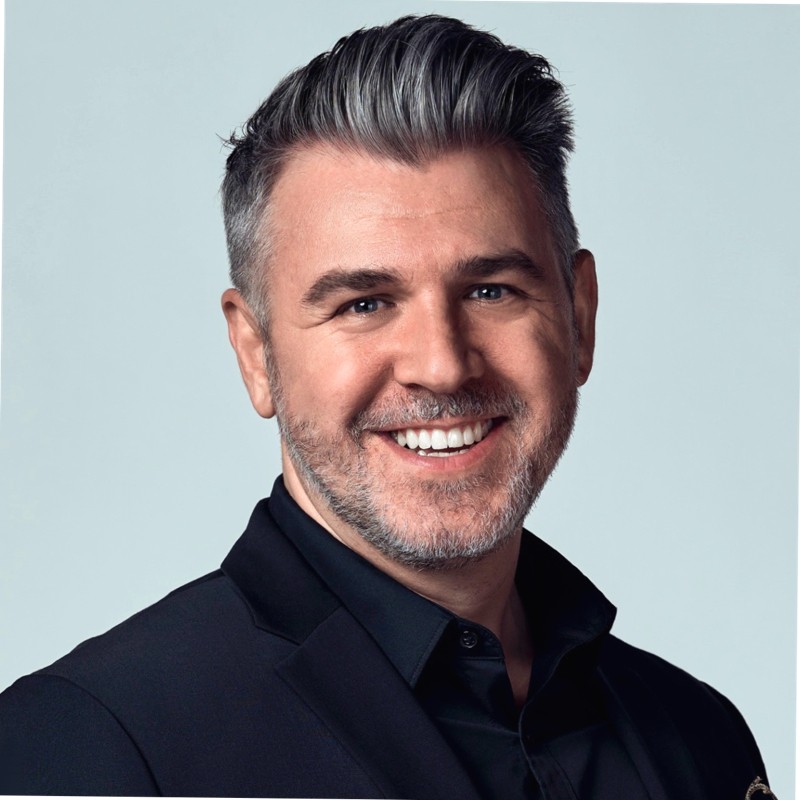
Mandy Hornaday: Hey, Gabe. Welcome to the Growth Activated Podcast. We're so excited to have you here today.
Gabe Lullo: Thank you so much, Mandy. First off, I just want you to know, and I know you know this, but I want your audience to know, how much of a big fan we are of yours. Our whole team loves the show. Thanks so much for having me on.
Mandy Hornaday: Awesome, that's great to hear. So Gabe, let's kick off with your background. Tell us a little bit about your career story and how you got to where you are today as the CEO of Alleyoop.
Gabe Lullo: I've been in sales since I was 11 years old. I didn't realize you could actually talk and make money. I thought it was unbelievable when I first found that out. When I was 11, I was raising money for a local aquarium. They had all the kids from schools selling t-shirts, and I sold the most in my entire school district. I grew up in a blue-collar town, so I thought the only way to make money was to lift heavy things or get hurt on the job. Sales was it for me. I got started in recruitment sales, then moved into a sales training company, and then came over to Alleyoop. I'm not a founder of the company. I actually started on the sales team, grew up within the business, and took over as CEO a few years ago.
Mandy Hornaday: That's awesome. Do you want to share a little bit about what Alleyoop does for the marketplace?
Gabe Lullo: Absolutely. An alley-oop is a basketball move where you throw the ball up perfectly and someone else comes in and slam dunks it. That's our analogy for sales development. We focus exclusively on the first part of the sales journey: the prospecting piece. We have over 150 Sales Development Reps, or SDRs, making cold calls and doing outbound outreach on LinkedIn, reaching out to over a million prospects a month. Our entire intention is to qualify leads, gauge interest, find the right person and the right fit, and then pass them, alley-oop them, to our clients' sales teams or founders who are running founder-led sales. Their job is to take it across the finish line and get the revenue.
Mandy Hornaday: One of the things that caught my attention very early on when we first spoke was your belief in content marketing and really building this content engine. I know you've personally been on over 400 podcasts, you have your own podcast, and every employee is a social and brand ambassador for Alleyoop. I'd love to walk through where that belief and investment came from. Was this always central to your growth strategy, or did it come as a response to a tougher environment for cold outreach?
Gabe Lullo: It's really a culmination of all of it. I had a marketing professor in college say: Gabe, it's not what you know, it's not who you know, it's who knows you. That's the key to marketing. When I came into the CEO role four years ago, I knew we had to shake things up. Cold outbound and the email inbox were getting harder and harder. Connection rates on the phone were getting harder. But the phone is not dead. That's a different conversation. We wanted to go out and make a big splash on LinkedIn, which is the best of both worlds for us. Our prospects, heads of marketing, heads of sales, are very active on LinkedIn. And SDRs we're recruiting every day are on LinkedIn too. So we said: let's be hyper-transparent about what we do and make a splash there.
Gabe Lullo: I really like Formula One and that F1 documentary on Netflix. I thought: why don't we just do a documentary about our business? So we hired an agency to start doing podcasting and put me on shows. We started posting, just me, two to three times a week. Very minimal to start. Fast forward: we looked at the total followers across all of our employee profiles. It was sad to say we only had 20,000 followers combined. Today we've amassed over 1.2 million new followers across all our employee profiles. We're posting 250 organic LinkedIn posts per week across our Alleyoop influencers. I'm also posting two to three times a day myself now. And 45% of our new business comes from LinkedIn. The other 55% comes from our own outbound prospecting. We drink our own Kool-Aid and do our own outbound. But LinkedIn content has completely revolutionized our growth trajectory.
Mandy Hornaday: Wow. One of the things I was curious about: this sounds like it's your primary marketing strategy from a demand gen perspective, combined with outbound. Do you view them as two standalone strategies, or have you figured out a way to weave them together authentically?
Gabe Lullo: I like taglines. Our approach is calls and content. Our outbound engine, which is of course what we sell, is cold calling. And then the other is content creation. Combined, that's our marketing strategy. We sell what we do ourselves. When a rep on my sales team makes a cold call to a VP of Sales, they're saying: what we do is outbound phone calls just like this, and if you're impressed by this call, you'll be impressed with us representing you. That's our approach. But the two are blended, not separate. We're also taking it to the next level in the DMs, not automating AI message sequences, but using voice notes and video notes. We get seven times the response rate on a voice note versus a text-based note. It humanizes the outreach and cuts through the noise.
Mandy Hornaday: That's interesting. I'll admit I haven't adopted voice notes personally. I'm terrible at checking them. But it's interesting to know how powerful they are.
Gabe Lullo: I don't send every message as a voice note, but the initial message to cut through the noise, saying hey, this is really Gabe, I'm not an AI bot, I actually want to reach out about something potentially relevant to you, that first handshake is super important. After that we go into typical back-and-forth. But we want to make that first impression real, as opposed to people feeling like they're just being spammed by something that isn't.
Mandy Hornaday: I imagine your connection rates and response rates are positively impacted by the fact that your team has built their personal brands too. The downstream impact must be pretty obvious.
Gabe Lullo: Exactly. You're recognizable. They know who you are, even just a little. We don't pitch-slap people. I'm not going to connect with someone and pitch them in two minutes. I connect and say: hey, thanks for the connection, hope you enjoy my daily content. That's it on day one. Then I wait about two weeks. They're seeing content in the feed over and over. And when you hit them with a voice note, they're actually thankful. They're like: this person who seems to be doing great things actually took time to send me a personalized note. It cuts through.
Mandy Hornaday: You went from 20,000 collective employee followers to 1.2 million. Walk us through that journey. It sounded like you started with your own executive brand and then slowly brought the rest of the team along.
Gabe Lullo: When we interview people to work here, we literally ask them how they feel about being a social content creator, not as a full-time role, just as a supported part of what they do. Nobody on our team has the title of content creator. They all have real day jobs. But we support them to create content. We don't mandate it. We look for people who already enjoy posting on their own platforms and are willing to bring that energy here. We have a full video team and copywriters who work on this full-time. We take our team members through in-house video sessions, one interview per person per month. Our video team cuts it into short clips and our copywriters create the copy, then it goes back to the person for final approval. It's their voice. We're not promoting Alleyoop. It's thought leadership content about the industry.
Gabe Lullo: We also run internal LinkedIn competitions every month. Whoever gains the most followers gets bonuses, prizes, a whole smorgasbord of options. Everyone spends 10 to 15 minutes a day doing 20 to 30 connection requests. Spread that across 200 people and it aggregates very quickly. That's how we got there.
Mandy Hornaday: Are you using any LinkedIn automation tools for any of this?
Gabe Lullo: Zero. We don't want to get banned or risk the account. We don't want it to feel inauthentic. LinkedIn has a lot of constraints and limitations, and we abide by them. We actually work with LinkedIn strategically, so we do it the way they want it done. No automation at all.
Mandy Hornaday: So just to confirm the workflow: a one-time monthly video session per employee, your marketing team splits that into clips and writes the copy, and the employee gets final say before it posts?
Gabe Lullo: Exactly. We work across different functions. Client success, sales, marketing, recruiting, and even some SDRs on our sales floor. Two to three people per department are enabled by our marketing team. We interview them on video, the team turns it into shorts, the writing team creates copy, it goes back to those individuals to tweak, edit, approve, and then post. That's our content workflow.
Mandy Hornaday: How did the program evolve from when you first started to where it is today? Was there a clear inflection point where you thought: okay, this is worth it, let's keep going?
Gabe Lullo: The first two people were me and our COO. We were posting three times a week ourselves. About two months later, we added two client-facing sales reps who were doing demos. We wanted them to become LinkedIn-famous as fast as possible. Those four were solid for about six months. We didn't know if it was going to work, but we told ourselves what we tell clients: it takes time. You're cooking popcorn. Takes three minutes. You need some delayed gratification.
Gabe Lullo: The moment I knew it was working was when I got on third-call demos with CEOs and they recognized me. They'd say: I saw your video, or I saw that podcast, or I read your newsletter and it really resonated with me. Thanks so much for getting on this call. They were thanking me for the call I was trying to sell them on. As soon as that started happening, we knew. Then inbounds started coming in and we knew even more. We went from four influencers to about 20 over the last couple of years.
Mandy Hornaday: So about 10% of your workforce of roughly 200 people are enabled influencers. Any advice for marketing leaders who want to create this kind of organic ambassadorship but don't have internal resources to support it with video and content teams?
Gabe Lullo: There are still a lot of companies completely against this idea. Two reasons: one, they're scared of having their reps poached. Two, they don't trust that employees will stay on brand and on message. I get both. But my response is: if your people are going to be poached, they're going to be poached anyway. And if you create a culture that promotes this, they'll probably want to stay. As for brand alignment, if you're doing it from the top, people will be encouraged. Here's how I encourage our team: I say, we'd love every one of you to post on LinkedIn. You're probably nervous, because I was super nervous. You're probably not sure what to say, because I didn't know what to say. You're probably worried about being off-brand, because I was too. So here's what we do: if you want to jump in the pool, send your post ideas to a group chat with me and our marketing team. We'll give you some advice. Do that three or four times and they're posting two or three times a week on their own. You never have to coach them again. The key is: make it easy to start, make it optional, and give them a safe place to get feedback before they go live.
Mandy Hornaday: Do you encounter situations where people spend too much time on content and not enough on their actual day job?
Gabe Lullo: We time-block everything. When we're in a calling sprint, everyone's on video cameras making calls together, fully remote by design, but we still all see each other on Zoom. That time block is for calling. And we have a separate block for LinkedIn. The whole company does LinkedIn together at a specific time each day. That keeps it intentional and contained, and it means everyone can support each other, share wins, high-five in the moment. Nobody's spiraling into LinkedIn for two hours when they should be prospecting.
Mandy Hornaday: We touched on 45% of revenue from LinkedIn and the employer branding benefits. Any other big outcomes you'd add for leaders evaluating whether to do this?
Gabe Lullo: Three pieces. First, recruiting. We used to spend six to eight thousand dollars a month on job ads on Indeed and ZipRecruiter. We now spend zero on job ads, and last year we had a record 4,200 applicants apply to work here as an SDR. We only hired 80, about 2%, but the pipeline was incredible and it all came inbound from our content. Second, new revenue. 45% from LinkedIn, as we talked about. Third, referral partners. We've built a community of over a thousand people in our industry through LinkedIn, and we've structured a real referral partnership program with them: rev share, a newsletter, access to our podcast, software that lets them track their referrals through the sales cycle so they're always in the loop. It's a real relationship, not a one-and-done referral. And it drives a meaningful portion of our business.
Mandy Hornaday: Is there a certain company stage, industry, culture, or leadership mindset that leaders should be asking themselves about before going down this path?
Gabe Lullo: Content is great everywhere, but you want to be specific about where your audience actually is. In our space, LinkedIn makes total sense. But ask yourself: is your audience there? If not, where is it? Go where they are. And in terms of getting started: in the beginning, I was writing my own posts and I'd block two hours on a Monday and write posts for the next two weeks, then schedule them. That's it. Don't try to write a post every day because you just won't do it. Spend two hours once a week and write for two weeks out. Once you're doing that consistently and starting to see results, bring help in. But there's no scenario where creating content actively hurts you. Even if you're a founder-led sales company or an established team, you can't lose by at least getting started.
Mandy Hornaday: As we wrap up, any insider tips on what's working hot on LinkedIn right now, beyond voice notes?
Gabe Lullo: Video notes in DMs are also really powerful, different from voice notes, but another way to stand out. Do it natively through LinkedIn, not through third-party tools that take you off platform. On the connection side: LinkedIn allows a maximum of 150 to 200 connection invites per week regardless of what plan you're on. If you send them all in one day, you'll get flagged as a spam bot. We do 30 per day, Monday through Friday. That's your 150 for the week. Be intentional about who you're connecting with. I personally don't send a note with my connection request. Statistically it doesn't improve acceptance rates much and it adds a lot of time. Two signals I look for: anyone with a yellow LinkedIn Premium badge is already paying for LinkedIn, which means they're using it and likely to accept. And look at who's commenting and liking posts in your industry. They're active on the platform and will probably connect back. I went from 2,000 to 25,000 followers over a few years just by being intentional about connecting with people I genuinely wanted in my network who I knew were active on the platform.
Mandy Hornaday: Great tips. Well, Gabe, thank you so much for joining us today. People can find you on LinkedIn, and tell everyone about your podcast.
Gabe Lullo: The podcast is called Do Hard Things. You know, you can actually make money without lifting heavy things, but talking to people, building businesses, sales and marketing is very difficult. You're dealing with rejection, personal growth, hearing no constantly. What I love to do is profile people who came from humble beginnings, maybe fell into sales and marketing, didn't go to school for it, and went on to become wildly successful. We take them through their journey regardless of industry and how they built that business or career.
Mandy Hornaday: I'm going to check it out. That sounds really interesting. All right, Gabe. Thanks so much and have a wonderful rest of your day.
Gabe Lullo: Thank you so much, Mandy.
Mandy Hornaday: Thanks so much for tuning into this episode of Growth Activated. I hope this conversation sparked new ideas, challenged your thinking, and gave you practical tools to help elevate your impact as a marketing leader. If it did, I would love for you to pass it along to a friend or a colleague in B2B marketing. The more we grow together, the more we raise the bar for what marketing leadership can look like. And as always, in the meantime, keep activating growth for yourself and your company. See you next time.