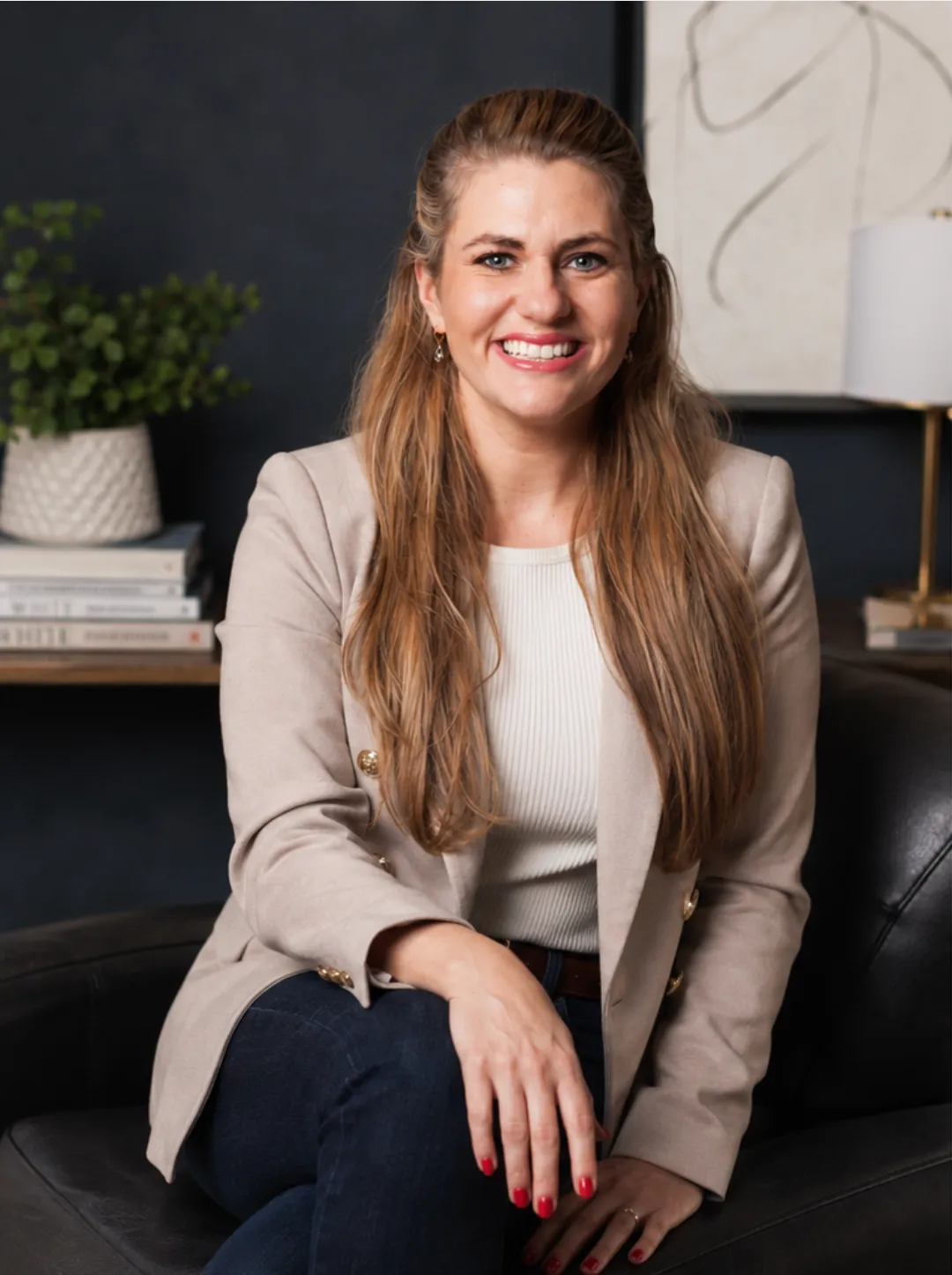
Mandy Hornaday: If you want to build a growth engine your competitors can't copy overnight, start with community.
Mandy Hornaday: Hey everyone, welcome back to Growth Activated. I'm your host, Mandy Hornaday. And today we're talking about one of the most underrated growth moats in B2B right now: community-led growth. I'm joined by Ridhi Singh, founder of 91 Ninjas, a go-to-market partner for B2B SaaS and AI companies. Ridhi has spent 15 years in marketing and has worked with businesses globally, and she brings a super clear point of view on what community-led growth actually is when you move past the buzzword. In this episode, we cover why community-led growth is surging right now, the difference between building an audience and building a community, who this strategy is really built for, and how to get started without overbuilding. If community-led growth has been on your roadmap but you've been unsure how to do it in a way that actually sticks, this one's for you. Let's get into it.
Mandy Hornaday: Hey, Ridhi, welcome to Growth Activated. We're so excited to have you here today.
Ridhi Singh: Hi, Mandy. Super excited. Thanks for having me here as well.
Mandy Hornaday: I am so looking forward to this conversation. As I've shared with you directly, I led a community for about 10 years at the beginning of my career, so I'm really excited to jam out with you today and learn from your expertise as well.
Ridhi Singh: Same here. I'm looking forward to sharing what I know and learning as well from whatever you've done. I'm sure there's a lot I can learn from you too.
Mandy Hornaday: Awesome. So before we dive in, I'd love to start with a little bit about your background and what you're doing today.
Ridhi Singh: I'm the founder of 91 Ninjas. 91 Ninjas is a GTM partner for B2B SaaS and AI companies. Prior to that, I was heading marketing at PayU India, which is a Naspers company. I've been a marketer for 15 years now. I started 91 Ninjas about five years back, and in the 10 years prior to that, I worked in various companies driving growth for businesses. Then I realized two things. The first was that GTM is a universal problem. Across the globe, whether you're in the US, India, China, Asia, anywhere. The second thing I realized is that life is too short to not have a flexible workspace. I have two kids. They're growing up fast, and I want to have a good career but also be there for them. That's when I started 91 Ninjas. We're completely remote. We've worked with 94 businesses globally so far, and I'm liking it.
Mandy Hornaday: I love that. It really resonates with me. I went fractional probably two years ago, I just hit my two-year anniversary actually, and I love the freedom. The freedom is the number one reason I do it. I'm recording this from the UK, working and traveling abroad. That would be really hard to do with a full-time job. So I'm right there with you.
Ridhi Singh: Absolutely. COVID, for all its challenges, did one good thing: people got very comfortable connecting virtually. It opened up a lot of opportunities and gave a different perspective and exposure. I keep saying this to my team, I genuinely think it would be tough for me to go back to an office now. This way of working is just more productive.
Mandy Hornaday: Totally. And that actually ties in nicely to the conversation we're having today. So much has changed in the last couple of years. The dynamics of where our buyers are have shifted. And what we are seeing, and I know what you're seeing as well, is the rise of community-led growth as a way to break through and get to buyers in this new environment. So talk to us: why now? What has changed and evolved so much that makes this a top strategy marketers should consider?
Ridhi Singh: Community-led growth has always existed, but earlier, other marketing channels were working fine and businesses could grow with those. Now there are two fundamental changes reshaping how we market and how we plan GTM strategies. The first is AI. In a world where a lot of content is being generated, a lot of videos are getting created, a lot of fake profiles are being made, how do you know whatever you're consuming and researching is genuine? That's where people will turn to people more to make decisions. And that is where community-led growth becomes important, because trust is a moat. Trust will become even more important than ever. The second change is Gen Z. They're now in the room and have significant weight in buying decisions. If you're selling to any business today, Gen Z is part of that panel. And Gen Z is social-first and community-first. They're way more informed than previous generations, they've done their research. If you're not there when they're talking to people, if you're not there when they're asking questions on socials and in communities, you're not even in the consideration set. And if you're not in the consideration set, how are you going to sell to them? So these are the two fundamental changes, and it will only increase from here. In my opinion, community-led growth is no longer optional. It's basically mandatory. And it's better to start investing early than later.
Mandy Hornaday: Interesting. And you know, it just dawned on me, maybe we even take a step back and define what community-led marketing and community-led growth actually is. Because I think there might be some questions out there. Is it just building an audience? If I'm nurturing an audience, is that my community? I'd love to hear your perspective on what it is and what it's not.
Ridhi Singh: That's a very good question. When we say community-led growth, we often confuse it with community building. Community building is building your audience. It's a conversation where the brand or a person is talking to an audience they've created. In community-led growth, it's community members talking to each other. That's the fundamental difference. It's not building an audience you talk to. It's not a Slack community where you track how many active members you have. It's a GTM strategy where audience members talk to each other and amplify. They play a very important role in the entire customer lifecycle, right from discovery to amplification. We're talking about your right segments, your power users. Are they talking about you at multiple places? And how do you put a strategy in place so that they keep talking about you?
Mandy Hornaday: I love the idea of allowing your audience to talk to each other as opposed to just this one-way or two-way communication between you and your buyer. When you said it's not just a Slack community, that struck a chord. But just to play devil's advocate, a Slack community does allow your audience to talk directly to each other. So why would having a Slack channel not necessarily be a community-led marketing approach?
Ridhi Singh: What I meant is that when businesses start thinking about community, they often think: should I have a WhatsApp group? Should I have Slack? How many active members are there? And we start thinking very online and very channel-specific, which isn't the right approach. Community-led growth could be an offline activity. It could be the goodies you're sending to your community. It could be birthday cards. It could be organizing meetups. A Slack channel or WhatsApp group is one channel to interact with the community, but it's not the entire community-led growth strategy. When you're thinking about it in principle, it's more about: how do you bring the entire community together? And there are two parts to it, creating value and having fun. Because that's what we all want as humans. Can you have that in any platform? And do you continuously keep doing that? You'd ideally want them on one platform, and Slack works beautifully. But if you're evaluating your community efforts by just counting how many people are on Slack, you're missing the point.
Mandy Hornaday: I love the idea of making sure there's fun. Because I think it's easy to forget that when you're constantly thinking about how are we delivering value and how do we make sure people are engaging with each other. One of the communities I spent over a decade building was called Tech in Motion. It ended up being about 350,000 tech professionals as part of this community, and we would host events all over North America monthly. It always made me smile because people loved the networking mixers more than the really great panels, fireside chats, and demo events. People would show up in droves for the networking mixer. And I think that speaks to your point, people just want to have fun and connect.
Ridhi Singh: Absolutely. And think about this: sometimes when businesses start thinking about community, they think about how do we push our product, is this our ICP? Of course ICP matters, but it's mostly a what-do-I-get-out-of-this-community mindset from day one, which is probably not the right mindset to start with. When you're starting a community, the mindset has to be different. These are people who are my right ICP. How do I make a difference in their lives? How do I ensure that they are able to do well professionally and personally? Apart from professional success, are these people also getting the kind of friends they can call at 3 a.m.? If that happens, your community is going to live. They'll stay, and now you're a part of their lives and not just a part of a transaction.
Mandy Hornaday: I've been part of so many communities that die out so quickly. There's this exciting bump of adoption, people joining with high expectations, and then within a few months it's dead and no one is engaging. The channels are quiet. That seems to happen at the drop of a hat. So talk to us a little about who is doing this really well that we could look to. I personally really admire Exit Five and everything they're doing, but I'd love your perspective. Which communities are you seeing being built right now and what are they doing differently?
Ridhi Singh: I love Exit Five as well, very, very well curated. From a business perspective, one brand that's the gold standard for me when it comes to community-led growth as a GTM strategy is Clay. Think about it: they helped people build professional careers out of the product they had. They talked about GTM and created a profession out of it. So many people are learning and getting better opportunities because of Clay. They could have just told people to use the product and highlighted new features. But instead, they identified who their power users were, what the use case was that helped those users create real business impact in their lives and professions. They collaborated with agencies. There are stories of two- or three-person agencies earning over a million a year because of what they built on top of Clay. That's real impact. When their investment round opened, they let the community participate. They have 60-plus clubs being run, and people are driven to host those clubs from their busy lives, which tells you about the kind of bonding and impact they've created. The community is now driving itself. And they also have fun. They recently did Clay Cups, where teams competed globally. The way it's all set up, they're not restricting themselves to one type of activity. They know how to have fun and how to create impact, and they have an amplification engine in place. It didn't happen in a day or in a year. It took significant time and resources. But the growth they're seeing now is because of that sustained effort. Clay should be the gold standard for how B2B businesses think about community-led growth.
Mandy Hornaday: Absolutely. Clay is the gold standard for a lot in marketing, in my opinion. And I remember seeing a couple months ago, a customer they learned about through their community was planning their own innovation day around how to better use Clay. And Clay said: come to our offices and we'll make a hackathon out of it. They recorded it, shared it, shared out the learnings, and I think some product improvements came out of it as well. What a cool way to involve your customers and community in what you're building.
Ridhi Singh: Exactly. And just as a marketer, I don't know how many times a day I hear about Clay. Wherever I go, LinkedIn, any community, any product challenge, anything in marketing, I still bump into Clay. That's what good community-led marketing looks like. If you're the right persona, they will reach you in some form.
Mandy Hornaday: I've never even used the product, but I know a lot about it. Just like you, I see and hear them everywhere. So Ridhi, I think one of the things I'd be asking myself if I were listening to this conversation right now is: yes, this sounds great, but it also sounds like a lot of work. From my own experience building Tech in Motion, it was. We had a full-time community manager in every one of our 14 markets. Times have changed and you don't need to invest that heavily coming out of the gates. But I'd ask you: who do you think this is actually the right strategy for?
Ridhi Singh: That's a very good question, and you're absolutely right. The investment and time required means very few businesses would have the resources or patience to stick with it. I believe there are three or four parameters to evaluate. First is the complexity of the product. If the product is complex or relatively new, like Clay was, there's a lot of education required. That's where you want your community to take on that education, learn, find use cases, and teach others. DevOps tools, Clay-type products, they fall into this category. A simpler email marketing software that people are already comfortable with probably needs it less. Second is when your ICP is skeptical. Developers, for example, don't like to be marketed to. They want to feel that the value is real. CFOs are another example. When the people you're selling to are skeptical, you need to earn their trust, and community is a way to do that. Third is culture. If you have a CEO asking for MQLs from day one, community-led growth cannot survive. The culture has to support a long-term growth mindset. You need at least a year of investment before you'll see meaningful results. And one additional check: if you have a simpler product with a fairly low ACV, community may not be the right initial channel. You'll probably get better results from ads or SEO first.
Mandy Hornaday: I really enjoy that framework. It hits me too because when I was working at a B2B SaaS company a couple of years ago, we weren't category creators, but we were taking a different approach, changing the way go-to-market operators were using that category of technology. It was really hard to bring people along and shift their perspective. As you were talking, I thought: a community would have been a great approach for what we were trying to build. And the other thing I wanted to ask you about is branding. When you're going after a market with that level of skepticism, we actually branded our community separately from the company. We were a recruiting and staffing firm, and we knew nobody was going to want to come to a recruiting event, but they'd come to a cutting-edge tech event. So we branded everything under a different name, with our company as the sponsor. I think that worked well for building trust with those skeptical personas. But we were constantly evaluating: does this negate what we're building from a brand perspective, or does it help? What's your take?
Ridhi Singh: My personal opinion: I would create the community separately from the main brand. There are enough company communities out there. I'd find subtle ways of branding it, powered by X, but it would be people-first. It would have a different name centered on the ICP, and all the communication would be useful to them. Keep the brand secondary and let it thrive. People will eventually know where it's coming from. But they want to feel that it's for the community, not for sales.
Mandy Hornaday: Good, I'm glad we did it right all those years ago, even before community-led growth was a term. And I'd noticed something on LinkedIn a couple months ago that I wanted to get your take on: a CMO was talking about this idea of having a separate community brand and the downstream implications for LLM optimization. Her team had noticed that the LLMs weren't necessarily correlating the two brands, but the community brand was giving a lot of power, trust, and credibility to their core brand. You focus a lot on LLM optimization at your agency. What are some of the downstream impacts we might not be thinking about when taking this approach?
Ridhi Singh: When you think about successful communities, you'll see revenue impact. Influenced pipeline numbers are better, conversion rates improve, pipeline velocity increases. Those are the known results. But one thing that's newer and increasingly being seen is that you will dominate AI visibility. When LLMs are pulling in data, they're pulling from sources, forums, and human conversations. If you're in forums, if you're in communities, if people are vouching for you, the LLMs treat you as an authority and give you those kinds of results. You'll get a lot more traffic and conversions from LLMs, and your mentions will go up. You'll be seen as a trusted resource. Most communities will have GTM engineers creating plays and playbooks. All of that data that people are creating gets fetched in from the community, which can amplify the kind of work your product can do without pulling directly from the product itself. And there's also the semantic coverage angle: hundreds of different conversation topics in your community will naturally reference your product or your solution in some form. That semantic coverage becomes pretty significant over time. When people are searching for related things, they'll find it everywhere.
Mandy Hornaday: I'm just reflecting back on our community. We could attribute at least 10% of our revenue directly, which at the time was meaningful because we eventually scaled to 750 million. And then there were countless ways it impacted retention, conversion rates, and speed within the sales process. One of the other really cool outcomes we didn't set out to build was competitive differentiation. It ended up being such a differentiator that when we were PE-backed and selling to new PE firms, it was one of the big reasons they chose our company over others. And it was great for talent attraction and internal employee pride and retention as well. I love learning about the LLM optimization angle too. The compounding impact of building a community really can't be overstated.
Ridhi Singh: Absolutely. And I love the point about differentiation. Today, if you're running an ad, your competitor can just run one too. If you create a content piece, they can replicate it. It's really difficult to hold differentiation for long. But community is not easy to replicate. If you invest in it and it becomes self-sustaining, and a good community will largely drive itself over time, that becomes a moat at multiple levels. And once you've made progress and you're visible, it's really tough for competitors to make your ICP switch to another community.
Mandy Hornaday: I remember when Tech in Motion really started to take off, a lot of competitors popped up trying to do something similar, and within a couple of months they'd disappear. They realized how much work and investment it really took.
Ridhi Singh: You're absolutely right. And once you've made some progress, it's really tough for competitors to make your ICP switch. If you're moving fast enough, it's very difficult to catch up if you're second.
Mandy Hornaday: So Ridhi, I'd love to dive into the logistics of this. For those listening who really resonate with the criteria you laid out, yes, this is the right strategy for me and my company, where do they start? Because I imagine it feels a little daunting.
Ridhi Singh: You don't need to think about scale from day one. The first thing is to identify your high-intensity users, your power users. The segment that's really going to drive the community. If you can find 20 to 25 people who are using the product extensively and in different ways, and also have good social media presence, that's step one. The second step is that whoever is heading this initiative needs to be there themselves. You can't delegate it to just anyone in the early days. A founder can't always invest that kind of time, so you need a leader, and that leader should be spending significant time on the community themselves initially. That's where the soul of the community gets built. You learn a lot about your ICP, and those learnings translate into product decisions, sales, and business strategy. Third, start thinking about unscalable ways to scale. It's perfectly fine to start on WhatsApp or a small Slack group restricted to 40 or 50 people. Then slowly build, learn, interact, make them advocates, and let it start amplifying from there. Once you have 50 people who are really connected, you're meeting, having conversations, getting feedback, genuinely trying to help them, then start thinking about how you ensure you're always bringing something new or useful at a consistent frequency. Because if you're very active one week and then silent the next, your community won't survive.
Ridhi Singh: A good framework: every month, list out your activities and think about whether each one falls into value creation or fun. If an activity doesn't fall into one of those two buckets, it probably shouldn't be part of your community efforts. For value creation, ask: are these people going to use this information to do better professionally? Is it something they can embed into their workflow? That's why they keep coming back. Because this is the place where they learn and grow and outperform others. And fun, everybody likes to have fun. Relatable jokes on ICP challenges, memes, being open and human about it rather than corporate, if your ICP is okay with that. Then you can layer in meetups, value drops, training sessions on the problem. Not product demos, but here's the problem you're facing and here's my framework for solving it. Show up, do it together, make the sessions actionable. People will show up because everyone has problems they want help solving. Collective learning shortens the learning curve for everyone.
Mandy Hornaday: Totally agree. And if you don't mind, I'd add a few of my own learnings. One thing we figured out really early at Tech in Motion was having our CTO heavily involved and making them the face of the community, because they are the persona, so much more relatable than I was. We had a team of 25 marketing leaders trying to build developer communities, and we had to pull in developers from our own team and find influencers and community members we could lift up to help guide the content. I'd encourage people to think about that. It even applies outside community, like if you're launching a podcast targeting HR professionals, consider having your CHRO be the one leading it. And the other thing we saw a lot of success with: don't be the only brand doing the talking. Lift up and feature other people in your community who add credibility through the halo effect. We were constantly in the background, featuring CTOs, CIOs, and VPs of Engineering from great tech companies. They were more the face of the community than we were.
Ridhi Singh: That's a beautiful lesson. If your community has to work, it has to be driven by people, by groups of people. You cannot be the face of it. When people take initiative to run training sessions, when the community starts driving itself, that's when it truly survives. And you're absolutely right about the team you need to make it work. You need a facilitator, not a dictator. Your community person is very different from a social media person. They're facilitating conversation, and over time the community takes over and they're just another member. You also need a domain specialist. Whether that's a developer or a GTM engineer depends on who you're selling to, but you need someone with the depth to answer the relevant questions. And you need a content and ops person to amplify everything everywhere, to make sure the community's work is being seen. Those three roles, plus someone leading the whole thing, are what I believe you need at the core.
Mandy Hornaday: At what point do people start really seeing this working? Because it does seem like a longer-term play, and you don't want people to give up too quickly. What time frame would you encourage people to commit to?
Ridhi Singh: Minimum a year. You can't expect a lot before that. But there are early indicators you should see. For example, we worked with a brand called Document360, and one of the first activities we did to build awareness within the community was a Global Writers Award. We didn't know what kind of response we'd get. It was the first activity. We saw 400 signups and 130,000 votes. There was a virality angle within it, and the response was really strong. So you will feel certain things working within that first year. It can't be: nothing is working but I'm still investing because I need to cross the one-year mark. You need to figure out within that year what is resonating, and amplify the initiatives that have seen some success. Experiment faster, see what resonates, and build on it.
Mandy Hornaday: I'd agree. For us, the two-year mark was when we hit about 50,000 members, which was a huge milestone. Then it took another year or two to hit 100,000. But we could tell much earlier that it was starting to work. I think the compound effect really sets in. You won't even realize it and suddenly people are everywhere. We went from 10 or 15 people in a conference room having pizza and beer to a 500-person event at NYU with some of the biggest tech leaders in New York, and that happened faster than you'd think. Once people see their peers are in it, they want to be there too.
Mandy Hornaday: This has been so much fun. It's been a bit of a walk down memory lane for me. Are there any final tips or lessons you'd share that we haven't touched on already?
Ridhi Singh: I think the biggest thing I'd say is: this is the time. If you qualify for investing in community-led growth, you must. Otherwise it's going to be too late. The same marketer who previously would have said there's too much investment, too much time, maybe fix other things first, now it's pretty clear where things are headed. It's needed not just for trust, but for visibility across AI platforms. We're going through the same kind of shift that happened when Google and Meta came along and everyone had to move to digital marketing and learn a whole new set of metrics and channels. That's happening again right now. The newer channels, including community, are going to be the channels that drive your business significantly. Make sure you're present there.
Mandy Hornaday: It's part of why I'm so bullish on events right now. We're all craving human interaction, and you can feel the AI-generated content everywhere, on LinkedIn, in your inbox. You can tell when a post is machine-generated. You can feel when an email is just another one cranked out by an agent. What stands out is where people are genuinely sharing something authentic. So I think the narrative is shifting to human-first, and community is at the core of that.
Ridhi Singh: Absolutely. AI is the wave, but we should think human-first. That narrative is being built now, and community is at the core of it.
Mandy Hornaday: I love it. Well, thank you so much for spending time with us today, Ridhi. This has been so much fun. For people who want to get in touch with you, it sounds like LinkedIn is probably the best place. Where can they find you?
Ridhi Singh: They can search Ridhi, founder of 91 Ninjas on LinkedIn and they should find my profile. Or they can drop me an email at ridhi@91ninjas.com.
Mandy Hornaday: Awesome. Well, thank you so much. It's been such a pleasure.
Ridhi Singh: Same here. Thank you for having me. Loved the conversation.
Mandy Hornaday: Thanks so much for tuning into this episode of Growth Activated. I hope this conversation sparked new ideas, challenged your thinking, and gave you practical tools to help elevate your impact as a marketing leader. If it did, I would love for you to pass it along to a friend or a colleague in B2B marketing. The more we grow together, the more we raise the bar for what marketing leadership can look like. And as always, in the meantime, keep activating growth for yourself and your company. See you next time.